Have you ever stopped while writing and wondered: Should the period go before quotation marks or after? This is one of the most common punctuation questions in English writing. Students, bloggers, business professionals, and even experienced writers often get confused because the answer depends on whether you are following American English or British English rules.
You may see one article written, She said, “I am ready.” while another wrote, She said, “I am ready”. Both can appear correct depending on the style guide being used. This difference creates confusion for anyone writing emails, reports, essays, websites, or social media posts.
Understanding where to place a period in relation to quotation marks helps make your writing look professional and accurate. In this guide, you’ll learn the simple rules, see practical examples, compare American and British English styles, and discover which approach is best for your audience.
Period Before Quotation Marks or After? – Quick Answer
The quick answer is:
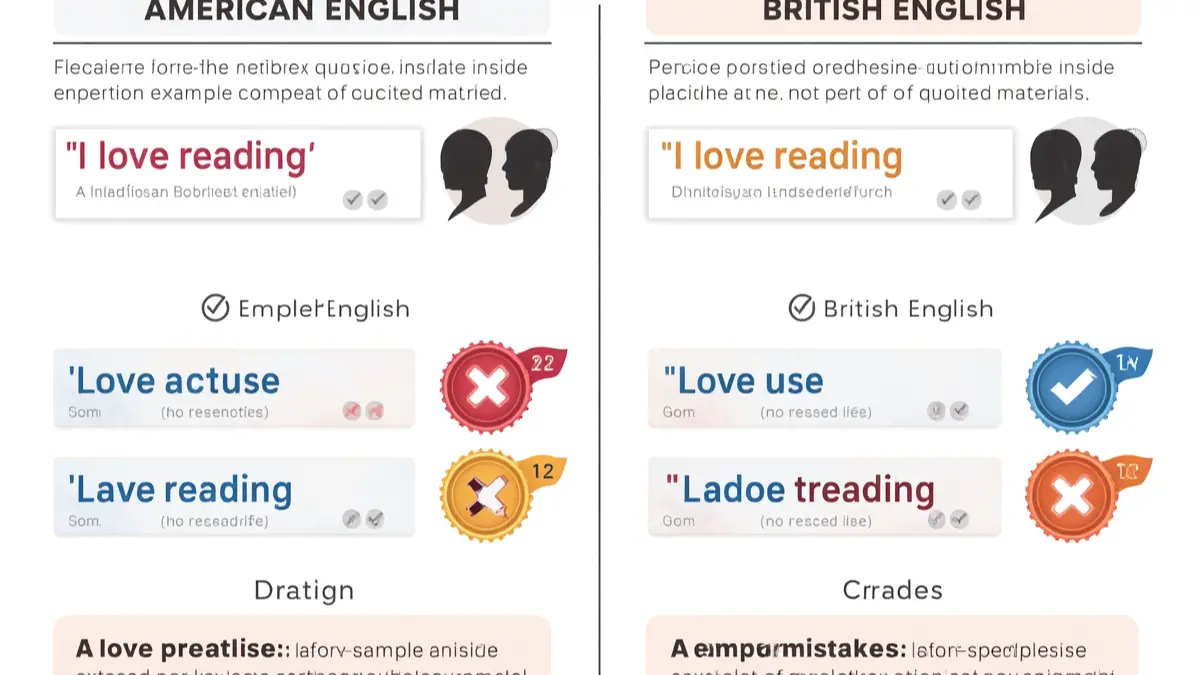
- American English: Place the period before the closing quotation mark.
- British English: Place the period after the closing quotation mark unless it is part of the quoted material.
Examples
American English
- She said, “I will arrive soon.”
- The article was titled “Writing Tips.”
British English
- She said, “I will arrive soon”.
- The article was titled “Writing Tips”.
Read more: Too Much or To Much: Simple Grammar Guide
Simple Rule
If you write for a U.S. audience, put the period inside the quotation marks. If you write for a UK audience, the period usually goes outside unless it belongs to the quoted sentence.
The Origin of Period Before Quotation Marks or After?
The difference comes from the historical development of punctuation styles in English-speaking countries.
In the United States, printers and publishers adopted a style that placed periods and commas inside quotation marks. This became standard in American publishing and education.
In the United Kingdom, writers preferred a more logical system. They placed punctuation according to meaning. If the punctuation was part of the quoted words, it stayed inside the quotation marks. If not, it remained outside.
Over time, these different approaches became accepted standards in their respective regions.
Why Do Differences Exist?
- American English favors typographical tradition.
- British English favors logical punctuation.
- Publishing houses and style guides reinforced these differences.
Today, both systems are correct when used consistently.
Read more: Whomever or Whomsoever: When to Use Each Correctly?
British English vs American English Spelling
Although this topic is about punctuation rather than spelling, the rule differs between British and American English.
| Feature | American English | British English |
| Period placement | Inside quotation marks | Usually outside quotation marks |
| Example | “The meeting is over.” | “The meeting is over”. |
| Publishing style | Traditional typography | Logical punctuation |
| Common usage | USA | UK, Australia, New Zealand |
More Examples
| American English | British English |
| He called it “amazing.” | He called it “amazing”. |
| The sign read “Closed.” | The sign read “Closed”. |
| She said, “Thank you.” | She said, “Thank you”. |
Which Spelling Should You Use?
The best choice depends on your audience.
Use American English Rules If:
- Your audience is in the United States.
- You write for American companies.
- You follow AP Style or Chicago Style.
- Your publication targets U.S. readers.
Use British English Rules If:
- Your audience is in the United Kingdom.
- You write for UK schools or businesses.
- You follow Oxford or other British style guides.
- Your readers are mainly in Commonwealth countries.
For Global Audiences
Choose one style and stay consistent throughout your document. Consistency matters more than the specific choice.
Common Mistakes with Period Before Quotation Marks or After?
Writers often make these errors.
Mistake 1: Mixing Styles
❌ He said, “Hello”.
❌ The article was called “Success.”
Using both styles in the same document creates inconsistency.
✅ Choose one style and use it throughout.
Mistake 2: Ignoring Audience Expectations
A U.S. audience expects:
✅ She called it “perfect.”
A UK audience often expects:
✅ She called it “perfect”.
Mistake 3: Copying Different Sources
Writers often copy content from multiple websites and accidentally mix punctuation styles.
Always edit your work to match one standard.
Mistake 4: Confusing Periods and Question Marks
Question marks often follow different rules based on meaning.
✅ Did she say “I am leaving”?
✅ She asked, “Are you leaving?”
Period Before Quotation Marks or After? in Everyday Examples
In Emails
American Style
Thank you for your message. I agree with your suggestion “for now.”
British Style
Thank you for your message. I agree with your suggestion “for now”.
In News Writing
American
The mayor called the event “a major success.”
British
The mayor called the event “a major success”.
On Social Media
American
Everyone keeps saying it’s “the best movie ever.”
British
Everyone keeps saying it’s “the best movie ever”.
In Formal Writing
American
The report described the project as “highly effective.”
British
The report described the project as “highly effective”.
Period Before Quotation Marks or After? – Google Trends & Usage Data
Search interest for period before quotation marks or after remains strong because punctuation questions affect students, writers, editors, and content creators.
Popular Regions
- United States: High interest in punctuation placement rules.
- United Kingdom: Frequent searches about logical punctuation.
- Canada: Mixed usage due to American and British influences.
- Australia and New Zealand: Generally follow British-style punctuation.
Common Search Intent
Users typically want to know:
- Which rule is correct?
- Whether periods belong inside or outside quotation marks.
- Differences between British and American English.
- Correct punctuation for academic and professional writing.
Comparison Table: Period Before Quotation Marks or After?
| Situation | American English | British English |
| Direct quote | “I agree.” | “I agree”. |
| Article title | “Writing Skills.” | “Writing Skills”. |
| Book title in quotes | “The Adventure.” | “The Adventure”. |
| Business email | Inside quotation marks | Usually outside quotation marks |
| Academic writing | Depends on style guide | Depends on style guide |
FAQs
1. Does a period go inside quotation marks?
In American English, yes. In British English, usually only if it belongs to the quoted material.
2. Why do Americans put periods inside quotation marks?
The practice developed from historical publishing and printing traditions.
3. Why does British English place periods outside quotation marks?
British English often follows logical punctuation rules based on meaning.
4. Which style is more correct?
Neither is more correct. Both are accepted in their respective regions.
5. What should international writers use?
Choose the style preferred by your audience and apply it consistently.
6. Do commas follow the same rule?
Generally, yes. American English places commas inside quotation marks, while British English often uses logical punctuation.
7. Can I mix British and American punctuation styles?
No. Consistency is important for professional writing.
Conclusion
The answer to the period before quotation marks or after depends largely on the version of English you are using. In American English, periods almost always go inside the closing quotation marks. In British English, periods usually go outside unless they are part of the quoted material itself. This difference is not a matter of right or wrong but rather a matter of style and regional convention.
If your readers are in the United States, follow American punctuation rules. If your audience is in the United Kingdom or many Commonwealth countries, British logical punctuation is often preferred. For international content, select one style and remain consistent throughout your writing.
Understanding this rule helps you avoid common punctuation mistakes and makes your writing appear polished and professional. Whether you’re writing emails, academic papers, blog posts, or social media content, using the correct punctuation style for your audience improves clarity and credibility.

SwiftHarbor is a dedicated English professor, language researcher, and the founder of SpellCompare.com. With years of academic experience in English grammar, vocabulary development, and linguistic comparison, SwiftHarbor specializes in simplifying complex language rules into clear, practical explanations.
As an expert in word usage, spelling differences, and commonly confused terms, SwiftHarbor has helped thousands of learners improve their writing accuracy and communication skills. Through SpellCompare.com, he provides detailed comparisons, easy examples, and research-based insights that make English learning accessible for students, writers, and professionals worldwide.
Known for a clear teaching style and structured explanations, SwiftHarbor focuses on eliminating confusion between similar words, improving grammar confidence, and promoting precise communication. His mission is simple: to make English easier, clearer, and more powerful for everyone.