Imagine you are getting ready for an important meeting. You have prepared your notes, dressed up, and reached the location on time. Then you receive a message: “The meeting has been cancelled.” If you are reading this in the United States, you may expect to see canceled instead.
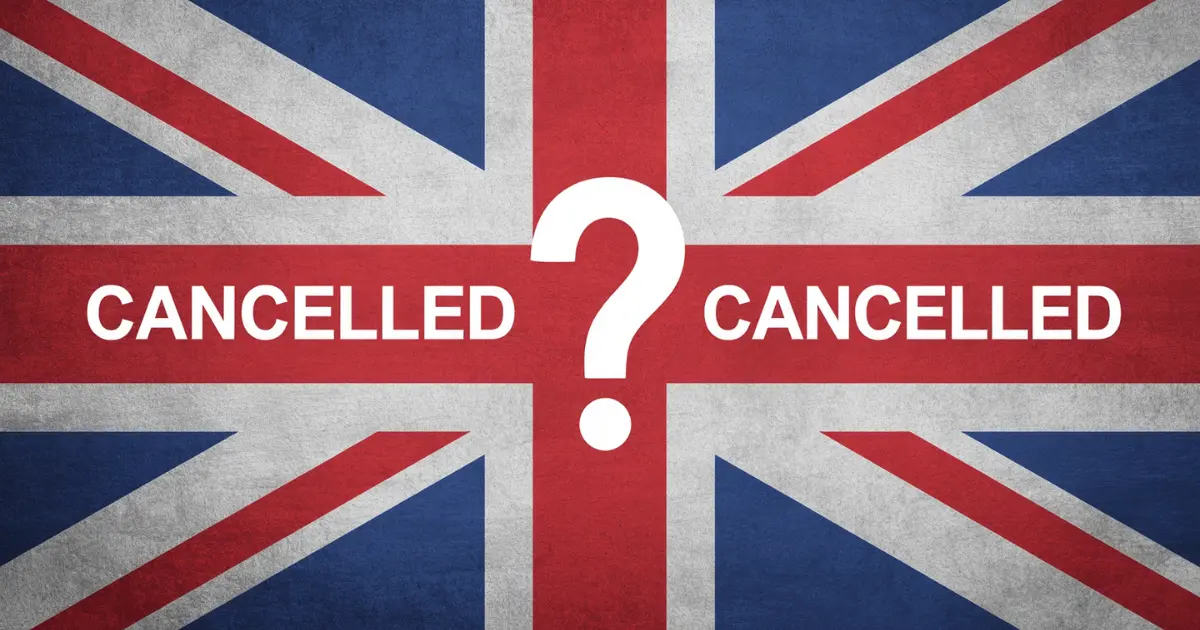
This small spelling difference often makes English learners wonder whether cancelled or canceled is the correct choice. The good news is that both words have the same meaning. They are simply different spellings used in different varieties of English. Cancelled or canceled both describe something that has been called off or stopped.
The main difference is regional: British English normally uses cancelled, while American English usually uses canceled. Understanding cancelled or canceled helps writers choose the spelling that matches their audience.
Key Difference Between Cancelled and Canceled
The key difference between cancelled and canceled is spelling, not meaning.
Cancelled has two l’s before the -ed ending.
Canceled has only one l before the -ed ending.
British English generally prefers cancelled, while American English generally prefers canceled. Both are grammatically correct.
For example:
- British English: The football match was cancelled.
- American English: The football game was canceled.
Neither sentence is wrong. The choice depends mainly on the variety of English being used.
Why Is Their Difference Necessary to Know for Learners and Experts?
Knowing the difference between cancelled and canceled is useful because English is spoken and written differently around the world. Students may see cancelled in British textbooks but encounter canceled on American websites.
For learners, understanding this difference prevents unnecessary spelling confusion. For teachers, editors, journalists, translators, and professional writers, consistency is especially important.
In modern society, people communicate internationally through emails, websites, social media, newspapers, academic papers, and business documents. A writer who understands regional spelling can communicate more naturally with readers in different countries.
The important point is simple: do not treat one spelling as correct and the other as incorrect. Choose the spelling that fits your audience and remain consistent.
Pronunciation of Cancelled and Canceled
The pronunciation of both words is essentially the same in standard English.
- British English: /ˈkæn.səld/
- American English: /ˈkæn.səld/
The spelling changes, but the extra l in cancelled does not create an extra spoken syllable.
So, once you understand the spelling difference, the next question is how these two forms behave in real English. That is where the difference becomes much easier to understand.
Difference Between Cancelled and Canceled
1. British vs. American Spelling
The biggest difference is geographical.
Cancelled is the standard spelling commonly associated with British English.
Canceled is the standard spelling commonly associated with American English. Microsoft also notes that the double-l spelling is used in British English, while American English commonly uses the single-l spelling.
Examples of cancelled:
- The flight was cancelled because of heavy rain.
- Our school trip was cancelled yesterday.
Examples of canceled:
- The flight was canceled because of heavy rain.
- The company canceled the meeting.
2. The Meaning Is the Same
There is no meaningful difference between the two words. Both are the past tense and past participle of cancel.
Cancelled means that something was stopped, called off, or no longer allowed to happen.
Canceled means exactly the same thing.
Examples:
- The concert was cancelled because the singer was ill.
- The concert was canceled because the singer was ill.
Both sentences communicate the same message.
3. The Verb Form Remains the Same
Both words come from the verb cancel.
The basic forms are:
- Present: cancel
- Past: cancelled/canceled
- Past participle: cancelled/canceled
- Present participle: cancelling/canceling
This is another place where British and American English can differ.
Examples:
- She cancelled her appointment.
- She canceled her appointment.
Again, the meaning remains unchanged.
4. British English Usually Doubles the “L”
British spelling generally follows the pattern of doubling the final consonant when adding certain endings to words such as cancel.
Therefore:
- cancel → cancelled
- cancel → cancelling
Examples:
- The manager cancelled the reservation.
- They are cancelling the event.
This spelling is especially common in British newspapers, schools, universities, and official writing.
5. American English Usually Uses One “L”
American English commonly keeps one l when forming the past tense.
Therefore:
- cancel → canceled
- cancel → canceling
Examples:
- The airline canceled the flight.
- The organizers are canceling the show.
This is the spelling American readers normally expect.
6. Formal Writing Requires Consistency
Neither spelling is automatically more formal than the other.
The important thing is to follow the spelling system of your chosen variety of English.
For example, if a British company uses British English throughout its website, cancelled is the natural choice.
Examples:
- The appointment was cancelled due to unforeseen circumstances.
- The appointment was canceled due to unforeseen circumstances.
Both are professional. The preferred form depends on the intended audience.
7. Academic Writing May Use Either Form
Students sometimes worry that one spelling will be marked wrong in academic writing.
Usually, the issue is not the word itself but whether the spelling matches the style guide being followed.
A British university may expect cancelled, while an American institution may prefer canceled.
Examples:
- The experiment was cancelled after the equipment failed.
- The experiment was canceled after the equipment failed.
Both can be correct in the appropriate variety of English.
8. The Difference Appears in Related Forms
The spelling difference does not stop with the past tense.
British English often uses:
- cancelled
- cancelling
American English often uses:
- canceled
- canceling
However, the noun cancellation is normally spelled with two l’s in both major varieties.
Examples:
- The cancellation of the flight caused problems.
- We received a cancellation notice.
This is why simply remembering “one country uses one l and the other uses two” is not enough for every form of the word.
9. Digital Communication Makes the Difference More Visible
Today, people read English from websites, apps, emails, social media, and international news sources.
A British reader may naturally write:
“The event has been cancelled.”
An American reader may write:
“The event has been canceled.”
Both can appear on the internet every day.
Examples:
- The live stream was cancelled due to technical problems.
- The live stream was canceled due to technical problems.
The reader understands both versions.
10. The Audience Should Guide Your Choice
The best way to choose between the two spellings is to think about your audience.
If your main readers are in the UK, cancelled is usually the better choice.
If your readers are mainly in the US, canceled is usually the better choice.
Examples:
- A British travel website may write: Your flight has been cancelled.
- An American travel website may write: Your flight has been canceled.
The goal is not to prove that one spelling is better. The goal is to communicate naturally with your readers.
Nature and Behaviour of Cancelled
Cancelled describes an action or decision that has already happened.
It often appears when an event, appointment, journey, service, plan, or arrangement is stopped.
For example:
- The match was cancelled.
- My appointment was cancelled.
- The train service was cancelled.
The word can also describe something that has been withdrawn or ended.
Its meaning is usually neutral. However, the situation around it can create positive or negative feelings.
Nature and Behaviour of Canceled
Canceled behaves in exactly the same way as cancelled. Its main difference is the spelling convention used in American English.
It can describe:
- canceled flights
- canceled meetings
- canceled orders
- canceled events
- canceled classes
- canceled plans
For example:
The manager canceled the meeting.
The sentence simply tells us that the meeting will no longer happen.
Why Are People Confused About Their Use?
People are confused because English does not have only one worldwide spelling system.
American and British English have developed different spelling conventions over time. Words such as colour/color, centre/center, and travelling/traveling show similar differences.
When learners see cancelled in one book and canceled on an American website, they may think one of them is a spelling mistake.
It is not.
The confusion becomes even greater because online content comes from many countries. A student in Pakistan, for example, may read British English in one textbook and American English on another website.
The easiest solution is to identify your preferred variety of English and use it consistently.
Cancelled vs. Canceled: Similarities and Differences
| Feature | Cancelled | Canceled |
| Meaning | Called off or stopped | Called off or stopped |
| Basic verb | Cancel | Cancel |
| Main variety | British English | American English |
| Number of “l”s | Two | One |
| Pronunciation | Essentially the same | Essentially the same |
| Past tense | Yes | Yes |
| Past participle | Yes | Yes |
| Used in formal writing | Yes | Yes |
| Used in everyday English | Yes | Yes |
| Correct spelling | Yes | Yes |
| Main difference | Regional spelling | Regional spelling |
Which Is Better in What Situation?
When Is Cancelled Better?
Cancelled is generally better when you are writing for a British English audience. It is also a natural choice for UK-focused websites, newspapers, academic materials, and professional communication.
For example:
The London conference was cancelled because of severe weather.
If your website follows British English, using cancelled throughout your content will make the writing more consistent.
When Is Canceled Better?
Canceled is generally better when you are writing for an American audience.
For example:
The New York event was canceled because of a storm.
American readers are accustomed to the single-l spelling.
If your website targets US readers, using canceled consistently is usually the safest choice.
Cancelled and Canceled in Metaphors and Similes
These words can also appear in figurative language, especially when talking about plans, hopes, relationships, or opportunities.
Metaphors
His dream of becoming a pilot was a cancelled flight before it even began.
Here, cancelled flight is used metaphorically to describe a dream that never reached its destination.
Another example:
The broken friendship became a canceled chapter in her life.
The phrase suggests that a relationship has ended, although no actual chapter was canceled.
Similes
His plan disappeared like a canceled flight.
Here, the cancelled flight is compared with something that suddenly disappears.
Another example:
Her opportunity vanished like a canceled appointment.
The comparison emphasizes how quickly an opportunity disappeared.
Connotative Meaning of Cancelled and Canceled
Both words are mainly neutral in their traditional grammatical meaning.
However, their emotional meaning depends on the context.
Positive Connotation
Sometimes cancellation can produce a positive result.
The cancelled meeting gave everyone time to finish their work.
Here, cancellation is helpful.
Negative Connotation
Cancellation can also create disappointment.
The cancelled concert left thousands of fans disappointed.
Here, the word has a negative emotional effect.
Neutral Connotation
In ordinary information, the word can simply provide a fact.
The flight was canceled at 8 a.m.
There is no strong positive or negative feeling in the sentence.
In modern social discussions, cancelled/canceled can also relate to “cancel culture,” where a person, brand, or public figure may face public criticism or loss of support because of controversial behavior. That modern meaning is different from the basic dictionary meaning of simply calling something off.
Idioms and Expressions Related to Cancelled or Canceled
There is no famous traditional proverb specifically built around cancelled or canceled, but several common expressions use the idea of cancellation.
1. Cancel at the Last Minute
This means to call something off shortly before it is supposed to happen.
Example:
He canceled the meeting at the last minute.
2. Cancel Out
Cancel out means to balance or neutralize something.
Example:
The advantages and disadvantages cancel each other out.
3. Call Something Off
This is a very common expression meaning to cancel something.
Example:
The organizers called off the match because of heavy rain.
4. Cancel Culture
This modern expression describes public criticism or rejection of people, organizations, or brands because of controversial actions or statements.
Example:
The actor became the subject of cancel culture after his controversial comments.
These expressions show that the idea of cancellation has become part of everyday language as well as modern social discussions.
Works in Literature Using “Cancelled” or “Canceled”
- Cancelled — Farrah Penn (2024) — Young adult fiction/novel. The novel follows a teenager dealing with reputation, friendship, and a damaging viral incident. It was published by Viking Books for Young Readers.
- Cancelled — Danny King (2024) — General fiction/novel. The novel was published in 2024 and was a finalist for the 2025 Prometheus Award.
- Cancelled Words: Rediscovering Thomas Hardy — Rosemarie Morgan (1992) — Literary criticism/biographical literary study. The book examines Hardy’s writing process and the “cancelled words” in his manuscripts.
The spelling with double l is especially visible in titles from British English contexts, while American publications may naturally use canceled.
Movies Using “Cancelled” or “Canceled” in Their Titles
- The Cancelled Movie (2009) — Drama, United States. Directed and written by Scott Shaw; released in the United States on February 5, 2009.
- Canceled (2019) — Comedy short film, United States. Directed by Jimmy Caputo, with a runtime of about six minutes.
- Cancelled (2026) — Drama short film, Australia. The film follows a band dealing with public cancellation after controversial remarks. It was released in Australia on January 31, 2026.
- Cancelled (2026) — Horror film, United Kingdom. Directed and written by Craig Quinn; released in the UK on January 31, 2026.
These titles also demonstrate that both spellings can appear in creative works.
Frequently Asked Questions
1. Is cancelled or canceled correct?
Both are correct. Cancelled is generally preferred in British English, while canceled is generally preferred in American English.
2. Is canceled American or British English?
Canceled is primarily the American English spelling.
3. Is cancelled British English?
Yes. Cancelled is the standard spelling commonly used in British English and is also found in other varieties influenced by British spelling.
4. Do cancelled and canceled mean different things?
No. They have the same basic meaning. Both are forms of the verb cancel and mean that something has been called off or stopped.
5. Which spelling should I use in an SEO article?
Use the spelling that matches your target audience. If your article targets US readers, canceled is usually the better choice. If it targets UK readers, use cancelled. More importantly, keep your spelling consistent throughout the article.
How Both Words Are Useful for Our Surroundings
Cancellation is a normal part of everyday life.
Flights may be canceled because of bad weather. Schools may be cancelled because of emergencies. Doctors may cancel appointments. Companies may cancel meetings. Sports events may be cancelled because of rain.
The words therefore help us communicate changes quickly and clearly.
Imagine receiving a message saying:
“The school bus service has been cancelled.”
You immediately know that you need another way to travel.
Similarly:
“Your appointment has been canceled.”
This tells you that the original arrangement is no longer active.
Whether you use one l or two, the purpose remains the same: to communicate an important change clearly.
Final Words for Cancelled and Canceled
Cancelled and canceled are not two different words with different meanings. They are two spelling forms of the same word.
The easiest rule to remember is:
British English → cancelled
American English → canceled
If you are writing for a British audience, choose cancelled. If you are writing for an American audience, choose canceled.
Do not worry if you see the other spelling in books, websites, or messages. It is not necessarily a mistake. It may simply reflect a different variety of English.
Conclusion
The debate over cancelled or canceled is much simpler than it first appears. Both spellings come from the same verb, cancel, and both mean that something has been stopped, called off, or withdrawn. The real difference is regional spelling. British English generally prefers cancelled, while American English generally prefers canceled.
For English learners, understanding this distinction can prevent confusion when reading international content. For professional writers, teachers, editors, and businesses, choosing the appropriate form helps maintain consistency and credibility.
The most important rule is not to decide that one spelling is “right” and the other is “wrong.” Instead, identify your audience, choose the appropriate English variety, and use it consistently.

Henry is a passionate English professor, language specialist, and the founder of SpellCompare.com. With years of academic experience and a deep understanding of grammar, vocabulary, and linguistic nuances, he has dedicated his career to helping students and writers master the English language with clarity and confidence.
As an expert in word comparisons, spelling differences, and grammar rules, Henry simplifies complex language concepts into easy-to-understand explanations. His mission is to eliminate confusion between commonly misused words and provide accurate, research-based guidance that improves writing skills for learners worldwide.
Through SpellCompare.com, Henry combines academic expertise with practical examples, creating content that is clear, reliable, and reader-friendly. His work focuses on precision, correctness, and helping others communicate effectively in both academic and professional settings.
When he’s not teaching or writing, Henry continues researching evolving language trends to ensure his content remains current, helpful, and authoritative.