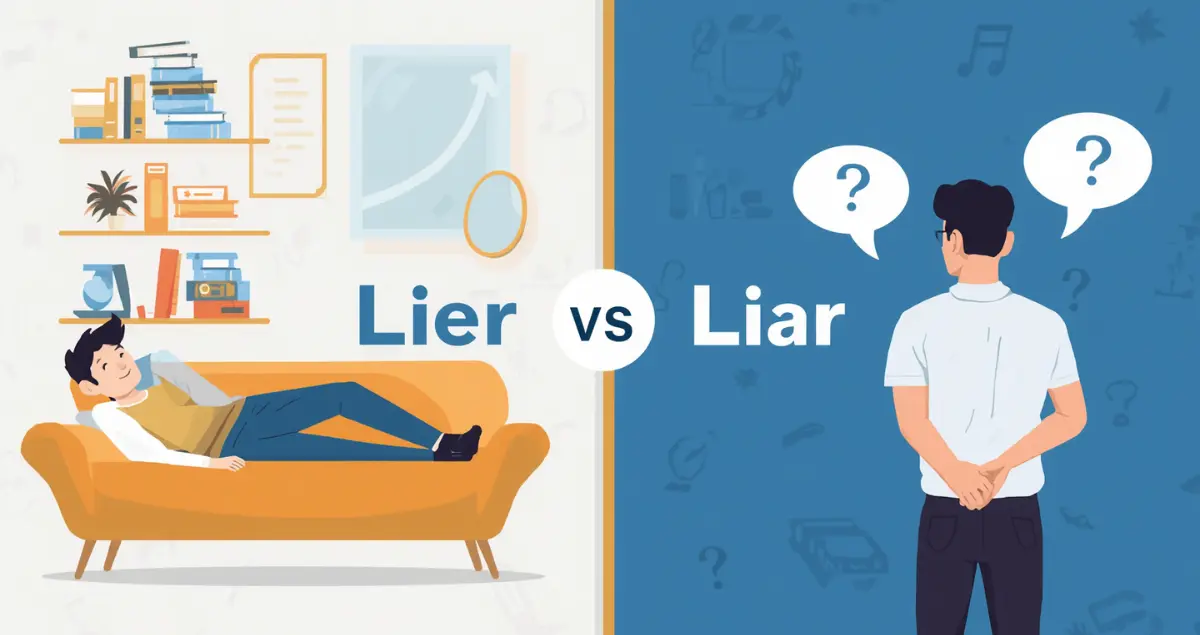
Have you ever wondered whether the correct word is lier or liar? Many English learners and even native speakers become confused when writing about someone who tells lies. The words look similar, sound somewhat alike, and both exist in English dictionaries. This often leads people to search for lier or liar to find out which spelling fits their sentence.
The confusion becomes even greater because lier is actually a real word, but it has a completely different meaning from liar. While a liar is someone who tells falsehoods, a lier is someone who lies down or remains in a particular position. Because the two words come from different verbs, using the wrong one can completely change the meaning of your sentence.
Understanding the difference between lier or liar helps improve grammar, writing accuracy, and professional communication. Whether you are writing an essay, email, article, or social media post, choosing the correct word ensures your message is clear. This guide explains their meanings, origins, examples, common mistakes, and proper usage.
Lier or Liar – Quick Answer
✅ Liar = A person who tells lies.
✅ Lier = A person or thing that lies down or remains in a position.
Examples
Liar
- He is a liar because he often tells false stories.
- Nobody trusts a liar.
Lier
- The dog is a quiet lier in the sun.
- She was a late lier in bed.
Read more: Acknowledgement or Acknowledgment: Which Is Correct?
Quick Comparison
| Word | Meaning |
| Liar | Someone who tells lies |
| Lier | Someone who reclines or lies down |
The Origin of Lier or Liar
The confusion exists because both words come from different English verbs.
Origin of Liar
Liar comes from the verb lie meaning “to tell an untruth.”
Example:
- Lie → Liar
Origin of Lier
Lier comes from the verb lie meaning “to recline” or “rest.”
Example:
- Lie down → Lier
Historical Development
Over time, English developed separate nouns for these different meanings.
Read more: Flushed Out or Fleshed Out: Which Phrase Is Correct ?
| Word | Origin |
| Liar | From “lie” meaning tell falsehoods |
| Lier | From “lie” meaning recline |
British English vs American English Spelling
There is no significant spelling difference between British and American English.
Both countries use:
- Liar
- Lier
The difference is based on meaning rather than regional spelling.
Examples
| British English | American English |
| He is a liar. | He is a liar. |
| The dog is a lier in the grass. | The dog is a lier in the grass. |
Comparison Table
| Feature | British English | American English |
| Liar | Yes | Yes |
| Lier | Yes | Yes |
| Spelling Difference | None | None |
Which Spelling Should You Use?
Your choice depends entirely on meaning.
Use Liar When
You mean someone who tells lies.
Examples:
- The witness was called a liar.
- Nobody trusts a habitual liar.
Use Lier When
You mean someone who lies down.
Examples:
- The cat is a peaceful lier.
- He was a late lier on weekends.
Audience Advice
| Audience | Recommended Word |
| General Readers | Usually Liar |
| Literary Writing | Liar or Lier |
| Professional Writing | Usually Liar |
| Everyday Communication | Usually Liar |
Since lier is uncommon, most people encounter liar far more often.
Common Mistakes with Lier or Liar
Mistake 1
❌ He is a lier because he always tells false stories.
✅ He is a liar because he always tells false stories.
Mistake 2
❌ Nobody trusts a lier.
✅ Nobody trusts a liar.
Mistake 3
❌ The dog is a liar on the couch.
✅ The dog is a lier on the couch.
Mistake 4
❌ She is a liar in bed every Sunday morning.
✅ She is a lier in bed every Sunday morning.
Lier or Liar in Everyday Examples
Emails
✅ The report suggests the witness was a liar.
News Writing
✅ Prosecutors described him as a habitual liar.
Social Media
✅ Nobody likes a liar.
Formal Writing
✅ The testimony revealed the defendant was a liar.
Literary Writing
✅ The old dog was a peaceful lier beneath the tree.
Lier or Liar – Google Trends & Usage Data
Searches for lier or liar are common because many people do not realize both words exist.
Common Searches
- Lier or liar
- Is lier a word?
- Difference between lier and liar
- Meaning of liar
- Meaning of lier
Popular Countries
| Country | Search Interest |
| United States | High |
| United Kingdom | High |
| Canada | Moderate |
| Australia | Moderate |
| India | High |
Usage Trends
Liar is overwhelmingly more common in modern English.
Lier appears mostly in literature, specialized writing, and dictionaries.
Lier vs Liar Comparison Table
| Feature | Lier | Liar |
| Real Word | Yes | Yes |
| Common Usage | Rare | Very Common |
| Meaning | One who lies down | One who tells lies |
| Everyday Writing | Rare | Frequent |
| Business Writing | Rare | Common |
| Literature | Sometimes | Often |
| Confused With | Liar | Lier |
FAQs
Is lier a real word?
Yes. It refers to someone who lies down or reclines.
Is liar a real word?
Yes. It means someone who tells lies.
Which word is more common?
Liar is much more common.
Can lier mean someone who tells lies?
No. That meaning belongs to liar.
Do British and American English use both words?
Yes. Both words exist in both varieties of English.
Why are people confused by lier and liar?
Because the spellings are similar and both come from different meanings of the verb “lie.”
Which word should I use in everyday writing?
Usually, you will need liar.
Conclusion
When comparing lier or liar, the most important thing to remember is that both words are correct but have different meanings. A liar is a person who tells lies or falsehoods. A lier is someone who reclines, rests, or remains in a particular position. Although the words look similar, confusing them can completely change the meaning of a sentence.
In everyday communication, liar is far more common because discussions about honesty and truth occur frequently. The word lier exists but appears mostly in literary, descriptive, or specialized contexts. There is no British-American spelling difference, so the choice depends entirely on what you want to say.
Whenever you write, ask yourself a simple question: Is the person telling lies or lying down? If they are telling lies, use liar. If they are reclining or resting, use lier. Following this rule will help you write with confidence and accuracy.

My name is SwiftSphere, and I am a passionate English language author and the creator of Spellcompare.com. I specialize in word comparisons, grammar clarity, and simplifying confusing English terms for readers around the world.
As a professional writer, I focus on breaking down commonly misunderstood words, phrases, and language rules into clear, practical explanations. My goal is to make English easier, more accurate, and more accessible for students, professionals, and everyday learners.
Through Spellcompare.com, I provide well-researched, easy-to-understand content that helps readers confidently choose the right words in writing and speech. Whether it’s comparing similar spellings, explaining grammar rules, or clarifying tricky vocabulary, I am committed to delivering precise and reliable guidance.
I believe that strong language skills create strong communication — and strong communication creates opportunity. That belief drives my work every day.