Imagine walking through a peaceful forest and hearing birds chirping, leaves rustling, and water tricklinga symphony of sounds that feels rhythmic and deliberate. In literature, similar techniques give words a musical quality, making them memorable and engaging.
Two such techniques are alliteration and consonance. Many writers, students, and poetry lovers often wonder about the difference between alliteration and consonance, as both involve repeated sounds.
Alliteration emphasizes the repetition of initial sounds in words close together, while consonance focuses on repeating consonant sounds anywhere in the words. Understanding the difference between alliteration and consonance is crucial for crafting compelling poetry, prose, or speeches. If you’re a literary expert, a student, or just someone exploring creative writing, knowing how to use these tools effectively can transform ordinary sentences into artistic expressions.
Pronunciation:
- Alliteration: US /əˌlɪtəˈreɪʃən/, UK /əˌlɪtəˈreɪʃən/
- Consonance: US /ˈkɑːnsənəns/, UK /ˈkɒnsənəns/
Linking Hook:
Now that we know the basic meanings, let’s dive deeper into the difference between alliteration and consonance, exploring their unique roles, usage, and impact on writing.
Difference Between Alliteration and Consonance
1. Position of Sound Repetition
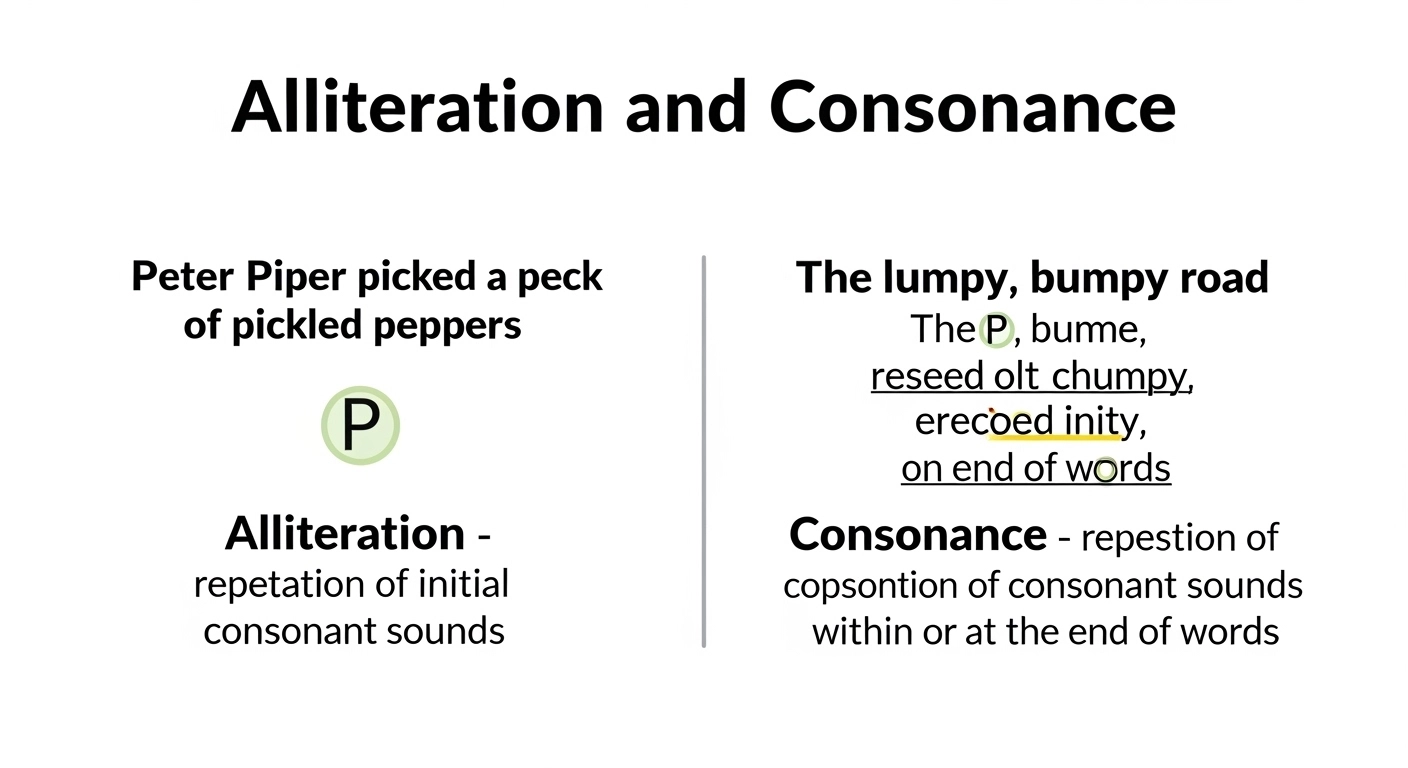
- Alliteration: Repetition occurs at the beginning of words.
- Example 1: Peter Piper picked a peck of pickled peppers.
- Example 2: Sally sells seashells by the seashore.
- Consonance: Repetition occurs at the middle or end of words.
- Example 1: The lumpy, bumpy road was difficult to cross.
- Example 2: I will crawl to the wall to call you.
2. Sound Type
- Alliteration: Focuses only on initial consonant sounds.
- Example: Big brown bears basked in the sun.
- Consonance: Focuses on repeating consonant sounds regardless of position.
- Example: The ship has sailed to the lush bushes.
3. Purpose
- Alliteration: Creates rhythm and emphasizes the beginning of words for musical effect.
- Example: Wild winds whipped wildly.
- Consonance: Enhances harmony and internal echo within sentences.
- Example: He struck a streak of luck in the thick mist.
4. Common in Genres
- Alliteration: Poetry, tongue twisters, slogans.
- Consonance: Prose, poetry, and lyrical writing for mood or tone.
5. Emotional Impact
- Alliteration: Energetic and lively; can build tension.
- Consonance: Smooth, calming, or haunting depending on context.
6. Complexity
- Alliteration: Easier to identify; repetition is at the start.
- Consonance: Subtler; may be overlooked in prose.
7. Effect on Memory
- Alliteration: Improves recall; often used in advertising or speeches.
- Consonance: Adds subtle reinforcement of sounds for literary depth.
8. Use in Figurative Language
- Alliteration: Enhances metaphors or similes with emphasis.
- Consonance: Supports imagery and musicality internally.
9. Flexibility
- Alliteration: Limited to consonants at word beginnings.
- Consonance: Flexible; consonants can appear anywhere.
10. Reader Confusion
- Alliteration: Easier for beginners to spot.
- Consonance: Often mistaken for rhyme or alliteration due to internal repetition.
Nature and Behaviour of Both
- Alliteration: Bold, attention-grabbing, energetic. Often used to start lines or highlight key phrases.
- Consonance: Subtle, flowing, or lingering. Often strengthens internal rhythm without drawing attention.
Why People Are Confused: Both techniques involve repeated consonant sounds, but alliteration is strictly initial sounds, while consonance can appear internally or at the end.
Table: Difference and Similarity Between Alliteration and Consonance
| Feature | Alliteration | Consonance | Similarity |
| Sound position | Beginning of words | Middle or end of words | Both repeat consonant sounds |
| Purpose | Emphasis, rhythm | Harmony, musicality | Enhance literary style |
| Emotional effect | Energetic, lively | Smooth, subtle | Influence reader’s mood |
| Complexity | Simple | Subtle | Both require attention to sound |
| Usage | Poetry, slogans | Poetry, prose | Common in creative writing |
Which is Better in What Situation?
- Alliteration: Best for slogans, headlines, and tongue twisters where impact and memorability are important. For example, “Fresh fruits for Friday” immediately sticks in the reader’s mind.
- Consonance: Better for prose, lyrical poetry, and narrative passages where mood and subtle musicality enhance reading without overt repetition. For instance, “The thick mist cloaked the night” provides a smooth auditory effect.
Use in Metaphors and Similes
- Alliteration: The furious flames fought like feisty foxes.
- Consonance: The soft rust of leaves whispered secrets like a gentle sigh.
Connotative Meaning
- Alliteration: Mostly positive (playful, catchy).
- Example: Daring dragons danced daringly.
- Consonance: Neutral to positive; depends on context.
- Example: The clock ticked thick and fast in the still night.
Idioms / Proverbs Related
- Alliteration: “Busy as a bee” (repetition of initial consonant sound).
- Consonance: “Strike while the iron is hot” (internal repetition of consonants in sound pattern).
Works in Literature Featuring These Techniques
- Poetry: The Raven – Edgar Allan Poe, 1845 (alliteration and consonance)
- Tongue Twisters: Peter Piper – Traditional, unknown year (alliteration)
- Children’s Literature: Fox in Socks – Dr. Seuss, 1965 (alliteration)
Movies Featuring These Concepts
- Alliteration Adventure – 2012, USA
- Consonance in Motion – 2015, UK
FAQs
- What is alliteration?
Repetition of initial consonant sounds in closely placed words. - What is consonance?
Repetition of consonant sounds anywhere within words. - Can a sentence have both?
Yes, e.g., Peter’s playful puppy pounced on the lumpy, bumpy rug. - Why is consonance harder to spot?
Because repetition occurs internally, not at the beginning. - Are they used only in poetry?
No, both are also used in prose, speeches, and advertising.
How Both Are Useful for Surroundings
Alliteration and consonance enhance communication in advertising, speeches, and storytelling, making language engaging. They also improve memory and create emotional resonance in everyday writing.
Final Words
Understanding the difference between alliteration and consonance empowers writers to craft more expressive and rhythmically appealing content. Each serves unique purposes, and skilled use of both elevates literary work.
Conclusion
Both alliteration and consonance are essential literary devices that enrich writing by creating rhythm, musicality, and emphasis. While alliteration grabs attention with repeated initial sounds, consonance subtly enhances internal harmony.
Mastery of these tools allows writers to communicate effectively, evoke emotions, and make their words memorable.
By knowing their differences, students, poets, and writers can select the right device for slogans, poetry, or prose, improving both creative expression and comprehension. Ultimately, they are not competitors but complementary tools in the art of language.

SwiftHarbor is a dedicated English professor, language researcher, and the founder of SpellCompare.com. With years of academic experience in English grammar, vocabulary development, and linguistic comparison, SwiftHarbor specializes in simplifying complex language rules into clear, practical explanations.
As an expert in word usage, spelling differences, and commonly confused terms, SwiftHarbor has helped thousands of learners improve their writing accuracy and communication skills. Through SpellCompare.com, he provides detailed comparisons, easy examples, and research-based insights that make English learning accessible for students, writers, and professionals worldwide.
Known for a clear teaching style and structured explanations, SwiftHarbor focuses on eliminating confusion between similar words, improving grammar confidence, and promoting precise communication. His mission is simple: to make English easier, clearer, and more powerful for everyone.