Imagine visiting a doctor because of a sudden fever. At the clinic desk, the receptionist asks you to pay a small fixed amount before seeing the doctor. Later, you discover your insurance still requires you to pay thousands of dollars before it starts covering most medical expenses. This is where many people become confused about the difference between copay and deductible.
The difference between copay and deductible is one of the most searched health insurance topics because these two terms directly affect medical expenses. Understanding the difference between copay and deductible helps people avoid financial surprises and choose better insurance plans. If you are a student, employee, parent, or healthcare expert, knowing the difference between copay and deductible is essential for making smart healthcare decisions.
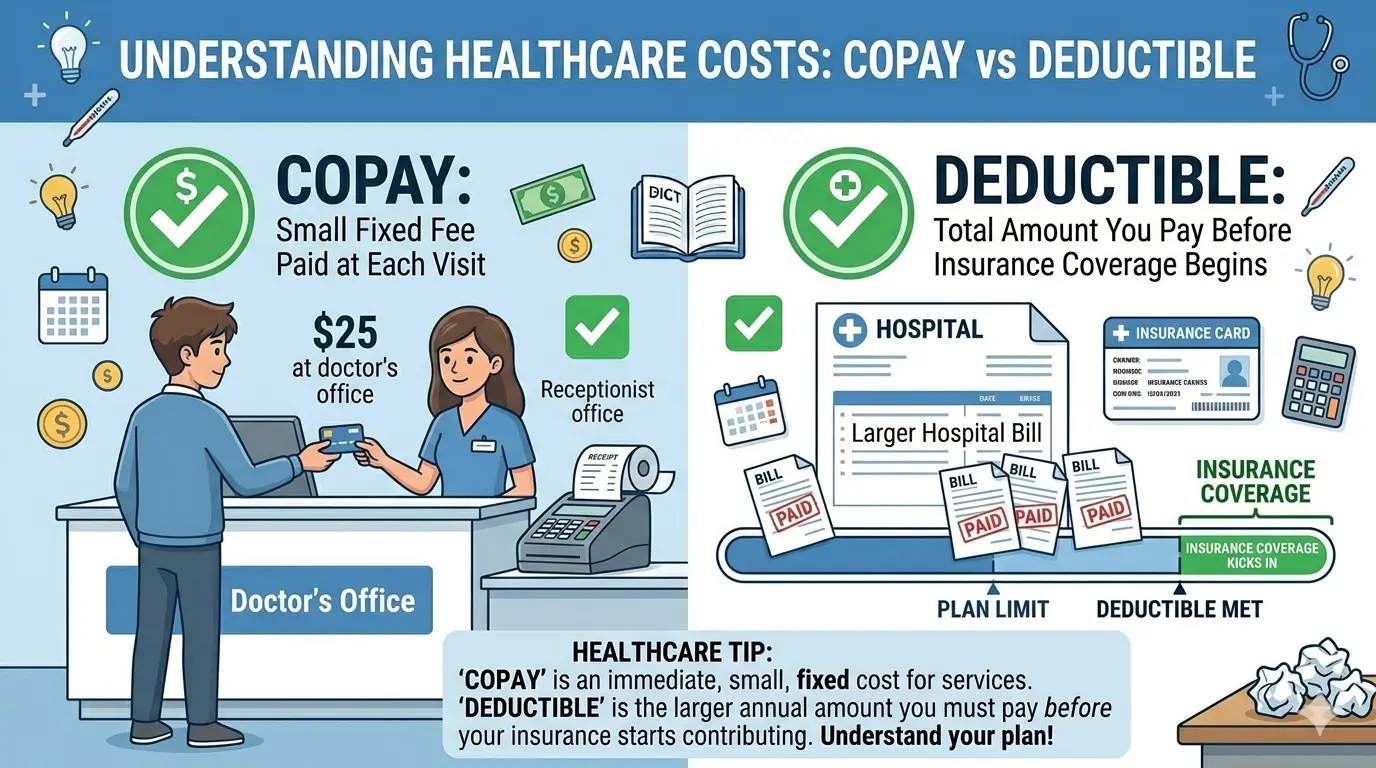
In simple words, a copay is a fixed amount paid for medical services, while a deductible is the amount you must pay before insurance starts sharing costs. Though they are connected, they work differently in insurance plans.
Pronunciation of Copay and Deductible
| Word | US Pronunciation | UK Pronunciation |
| Copay | /ˈkoʊ.peɪ/ | /ˈkəʊ.peɪ/ |
| Deductible | /dɪˈdʌk.tə.bəl/ | /dɪˈdʌk.tɪ.bəl/ |
Understanding these terms becomes easier once we explore how they work in real-life healthcare situations.
Key Difference Between Copay and Deductible
A copay is a fixed fee paid every time you receive a medical service, such as visiting a doctor or buying medicine. A deductible is the total amount you must pay out of your own pocket before your insurance company begins covering most healthcare costs.
For example:
- A $20 doctor visit fee is a copay.
- A $2,000 yearly payment requirement before insurance coverage begins is a deductible.
Both help insurance companies share healthcare costs with policyholders, but they apply in different ways.
Difference Between Parfum and Perfume: Which One Suits You ?
Why Is Their Difference Necessary to Know?
Understanding the difference between copay and deductible is important because healthcare costs affect millions of people every day. People who misunderstand insurance terms may choose unsuitable plans or face unexpected bills.
Importance for Learners
Students and beginners studying finance, insurance, or healthcare need to understand these concepts to build financial awareness.
Importance for Professionals
Doctors, insurance agents, employers, and financial advisors use these terms regularly. Correct knowledge helps them guide patients and customers effectively.
Importance for Society
When citizens understand insurance systems, they make better healthcare decisions. This reduces financial stress and encourages responsible medical planning.
Difference Between Copay and Deductible
1. Meaning
Copay
A copay is a fixed amount paid for a healthcare service.
Examples:
- Paying $25 for a dentist visit.
- Paying $10 for prescription medicine.
Deductible
A deductible is the amount paid before insurance starts helping.
Examples:
- Paying the first $1,500 of hospital bills yourself.
- Covering surgery expenses until the deductible limit is met.
Difference Between Supercharger and Procharger : Ultimate Guide
2. Payment Style
Copay
Paid in small fixed amounts during each visit.
Examples:
- $30 every doctor appointment.
- $15 for each medical test.
Deductible
Paid gradually until the required yearly amount is completed.
Examples:
- Paying several hospital bills to reach $2,000.
- Paying emergency room charges until coverage starts.
3. Timing
Copay
Paid immediately during medical service.
Examples:
- Paying at the clinic counter.
- Paying while buying medicine.
Deductible
Applies before major insurance benefits begin.
Examples:
- Insurance denying full coverage before deductible completion.
- Paying surgery costs early in the year.
4. Cost Amount
Copay
Usually smaller and predictable.
Examples:
- $20 clinic fee.
- $5 prescription fee.
Deductible
Usually larger and less predictable.
Examples:
- $3,000 annual deductible.
- $5,000 family deductible.
5. Purpose
Copay
Encourages shared healthcare responsibility.
Examples:
- Patients contributing small fees.
- Preventing unnecessary doctor visits.
Deductible
Reduces insurance company risk.
Examples:
- Customers sharing large medical costs.
- Lower monthly insurance premiums.
6. Frequency
Copay
Paid repeatedly.
Examples:
- Paying every checkup.
- Paying for every prescription refill.
Deductible
Usually paid once yearly until completed.
Examples:
- Completing annual deductible in February.
- No deductible payments after reaching the limit.
7. Effect on Insurance Premiums
Copay
Smaller copays may increase monthly premiums.
Examples:
- Premiums rising for $5 copay plans.
- Expensive plans with lower visit fees.
Deductible
Higher deductibles often lower premiums.
Examples:
- Cheap monthly plans with high deductibles.
- Expensive deductibles reducing insurance costs.
8. Common Use Areas
Copay
Mostly linked to routine healthcare.
Examples:
- Doctor consultations.
- Prescription drugs.
Deductible
Common in major healthcare services.
Examples:
- Hospital stays.
- Surgeries and emergency care.
9. Financial Risk
Copay
Lower personal financial risk.
Examples:
- Small clinic payments.
- Affordable prescription fees.
Deductible
Higher financial responsibility.
Examples:
- Large emergency bills.
- Paying thousands before coverage.
10. Psychological Effect
Copay
Feels manageable and less stressful.
Examples:
- Comfortable paying $15 visits.
- Predictable healthcare spending.
Deductible
Can create anxiety about large expenses.
Examples:
- Fear of hospital bills.
- Delaying treatment due to high costs.
Nature and Behaviour of Both
Nature of Copay
Copays are simple, immediate, and predictable. They act as small contributions toward healthcare services.
Behaviour of Copay
Copays occur frequently but in smaller amounts. They encourage regular healthcare use without major financial pressure.
Nature of Deductible
Deductibles are larger financial obligations designed to share medical risks between the insurer and policyholder.
Behaviour of Deductible
Deductibles affect long-term healthcare spending and influence how people choose insurance plans.
Why People Are Confused About Their Use
People often confuse copays and deductibles because both involve paying money during healthcare treatment. Insurance policies also contain complex language that can be difficult for beginners.
Another reason is that some services require both a copay and deductible at different stages of treatment.
Table Showing Difference and Similarity Between Copay and Deductible
| Feature | Copay | Deductible | Similarity |
| Meaning | Fixed fee | Total yearly payment limit | Both involve healthcare payments |
| Amount | Small | Large | Both affect expenses |
| Frequency | Every visit | Until yearly limit reached | Both depend on insurance plans |
| Timing | During service | Before insurance coverage | Both linked to medical care |
| Predictability | Predictable | Variable | Both impact budgeting |
| Financial Burden | Lower | Higher | Both require personal spending |
Which Is Better in What Situation?
When Copay Is Better
Copay plans are better for people who frequently visit doctors or buy medicines regularly. They provide predictable expenses and reduce surprise medical costs. Families with children, elderly individuals, and patients with chronic illnesses often benefit from lower copays because they use healthcare services more often. Small fixed fees make budgeting easier and encourage regular medical checkups.
When Deductible Is Better
High-deductible plans are better for healthy people who rarely need medical treatment. These plans usually offer lower monthly premiums, helping users save money over time. Young professionals and people without regular medical conditions may prefer higher deductibles because they do not expect frequent healthcare expenses. Such plans are also useful for emergency-focused coverage.
How the Keywords Are Used in Metaphors and Similes
Copay in Metaphors and Similes
- “A copay is like a ticket fee before entering a concert.”
- “Paying a copay feels like dropping coins into a vending machine.”
Deductible in Metaphors and Similes
- “A deductible is like climbing a hill before reaching help.”
- “Facing a deductible feels like carrying a heavy backpack.”
Connotative Meaning of Both Keywords
| Word | Connotation | Example |
| Copay | Neutral to Positive | “The low copay made doctor visits affordable.” |
| Deductible | Neutral to Negative | “The high deductible worried many families.” |
Idioms or Proverbs Related to the Words
Although there are no direct idioms for these insurance terms, related financial expressions include:
“Pay the Price”
Meaning: Face the consequences or cost.
Example:
“After ignoring insurance details, he had to pay the price with huge hospital bills.”
“A Penny Saved Is a Penny Earned”
Meaning: Saving money is valuable.
Example:
“Choosing the right deductible proved that a penny saved is a penny earned.”
Works in Literature Mentioning Insurance Themes
- “Nickel and Dimed” — Barbara Ehrenreich (Nonfiction, 2001)
- “An American Sickness” — Elisabeth Rosenthal (Healthcare Analysis, 2017)
- “The Health Care Handbook” — Elisabeth Askin & Nathan Moore (Educational, 2012)
Movie Names Related to Healthcare and Insurance Themes
- “John Q” — (2002, USA)
- “Sicko” — (2007, USA)
- “Patch Adams” — (1998, USA)
- “The Doctor” — (1991, USA)
Frequently Asked Questions About Their Difference
1. What is the main difference between copay and deductible?
A copay is a fixed fee for medical services, while a deductible is the amount paid before insurance coverage begins.
2. Do copays count toward deductibles?
Sometimes. It depends on the insurance plan.
3. Which is more expensive?
Deductibles are usually more expensive because they involve larger yearly costs.
4. Can you have both copay and deductible in one plan?
Yes. Many insurance plans include both.
5. Why do insurance companies use deductibles?
Deductibles help share healthcare costs between insurers and customers.
How Both Are Useful for Surroundings
Copays encourage people to seek regular healthcare, improving public health. Deductibles help insurance systems remain financially balanced by reducing unnecessary claims. Together, they support healthcare sustainability and responsible medical spending in society.
Final Words for Both
Copays provide manageable short-term healthcare expenses, while deductibles shape long-term insurance planning. Both play important roles in modern healthcare systems and influence how people access medical treatment.
Conclusion
Understanding the difference between copay and deductible is essential for anyone using health insurance. Although both involve personal healthcare spending, they work differently. Copays are small fixed payments made during medical visits, while deductibles are larger amounts paid before insurance coverage increases. Knowing how each works helps people choose suitable insurance plans, manage healthcare budgets, and avoid financial confusion.
In today’s world, healthcare expenses continue to rise, making insurance knowledge more important than ever. Whether you are a student, professional, or family member, learning these concepts can improve financial security and healthcare decision-making. By understanding the difference between copay and deductible, individuals become more confident and responsible healthcare consumers.

SwiftHarbor is a dedicated English professor, language researcher, and the founder of SpellCompare.com. With years of academic experience in English grammar, vocabulary development, and linguistic comparison, SwiftHarbor specializes in simplifying complex language rules into clear, practical explanations.
As an expert in word usage, spelling differences, and commonly confused terms, SwiftHarbor has helped thousands of learners improve their writing accuracy and communication skills. Through SpellCompare.com, he provides detailed comparisons, easy examples, and research-based insights that make English learning accessible for students, writers, and professionals worldwide.
Known for a clear teaching style and structured explanations, SwiftHarbor focuses on eliminating confusion between similar words, improving grammar confidence, and promoting precise communication. His mission is simple: to make English easier, clearer, and more powerful for everyone.