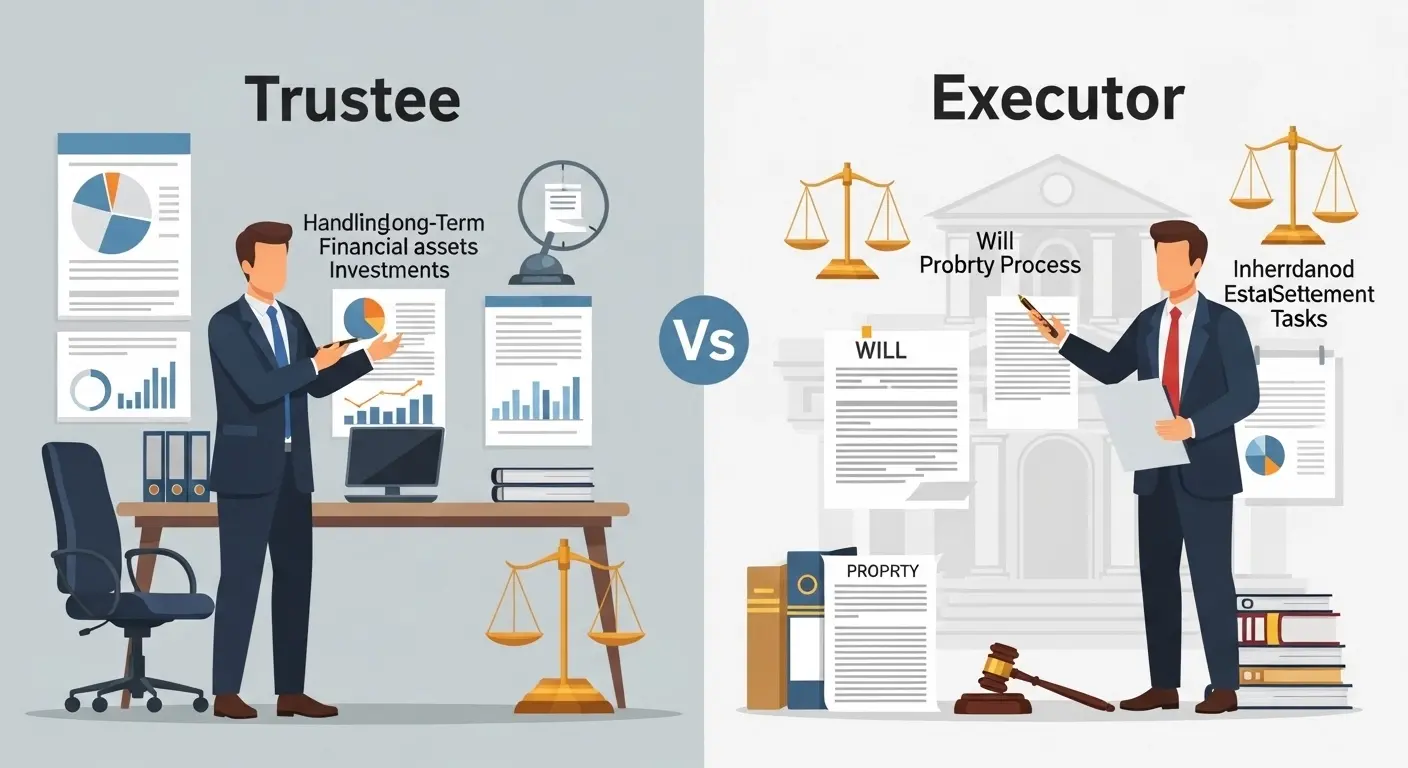
Understanding the difference between trustee and executor is essential when dealing with wills, estates, and financial planning. Many people confuse the difference between trustee and executor because both roles involve managing someone else’s assets after death. However, the difference between trustee and executor becomes clear when you look at their duties and timing.
Imagine a family after the passing of a grandfather. He leaves a will naming his son as an executor and a trusted lawyer as a trustee for a long-term family trust. The executor handles the immediate distribution of property, while the trustee manages funds for grandchildren over many years.
This real-world situation shows the importance of knowing the difference between trustee and executor in legal and financial matters. Misunderstanding these roles can lead to confusion, delays, and even disputes in families.
Key Difference Between Trustee and Executor
The main difference is that an executor manages the estate after death, while a trustee manages a trust that may continue for years or decades.
Why Knowing the Difference Matters
Understanding this distinction is important for lawyers, families, and financial planners because it ensures proper asset distribution, prevents legal conflicts, and protects beneficiaries’ rights in society.
Pronunciation
- Trustee:
- UK: /trʌsˈtiː/
- US: /trʌsˈtiː/
- Executor:
- UK: /ɪɡˈzekjʊtə/
- US: /ɪɡˈzekjətɚ/
A clear understanding of pronunciation helps in legal discussions and documentation, especially in professional environments.
Difference Between Survey and Questionnaire: in (2026)
Difference Between Trustee and Executor
1. Role Timing
- The Executor acts after death to settle the estate.
- Example 1: Paying funeral expenses from estate funds.
- Example 2: Closing the deceased’s bank accounts.
- Trustee manages assets during and after a trust is created.
- Example 1: Managing education funds for a child.
- Example 2: Investing trust money for long-term growth.
2. Legal Document
- The executor is named in a will.
- Example 1: A father names his daughter in his will.
- Example 2: A businessman appoints a lawyer as executor.
- The trustee is named in a trust document.
- Example 1: A trust for grandchildren’s education.
- Example 2: A charitable trust for community support.
3. Duration of Responsibility
- The Executor role is short-term.
- Example 1: Completing estate distribution in 6 months.
- Example 2: Settling debts within a year.
- The trustee role is long-term.
- Example 1: Managing funds for 20 years.
- Example 2: Ongoing charity fund management.
4. Purpose
- The Executor ensures the estate is legally settled.
- Example 1: Distributing inheritance.
- Example 2: Paying taxes.
- Trustee ensures trust beneficiaries are supported.
- Example 1: Monthly allowance to a beneficiary.
- Example 2: Education funding.
5. Control of Assets
- The Executor temporarily controls assets.
- Example 1: Selling property to clear debts.
- Example 2: Collecting outstanding dues.
- The trustee has ongoing control.
- Example 1: Managing investments.
- Example 2: Renting property for income.
6. Court Involvement
- Executors often work under probate court.
- Example 1: Getting legal approval for will.
- Example 2: Submitting estate inventory.
- Trustee may operate independently after setup.
- Example 1: Managing trust without court.
- Example 2: Reporting only to beneficiaries.
7. Fiduciary Duty
- Executor protects estate interests.
- Example 1: Avoiding unnecessary expenses.
- Example 2: Ensuring fair distribution.
- Trustee protects beneficiaries long-term.
- Example 1: Investing wisely.
- Example 2: Preventing misuse of funds.
8. Payment Source
- Executors are paid from estate funds.
- Example 1: Fixed executor fee.
- Example 2: Percentage of estate value.
- Trustee is paid from trust income.
- Example 1: Annual management fee.
- Example 2: Commission from returns.
9. Decision Authority
- The Executor has limited decision-making power.
- Example 1: Following instructions strictly.
- Example 2: Selling assets only if needed.
- The trustee has flexible management authority.
- Example 1: Adjusting investments.
- Example 2: Changing distribution timing.
10. End of Role
- Executor role ends after estate closure.
- Example 1: Final asset distribution completed.
- Example 2: Court closes probate case.
- Trustee role ends when trust expires.
- Example 1: Beneficiary reaches age limit.
- Example 2: Trust purpose is fulfilled.
Nature and Behaviour of Trustee and Executor
The executor behaves like a short-term administrator focused on settling debts, distributing assets, and closing financial matters quickly. Their nature is procedural, time-bound, and legally strict.
The trustee behaves like a long-term guardian of assets. Their role is more strategic, requiring financial planning, investment decisions, and ongoing responsibility toward beneficiaries.
Why People Get Confused
People confuse trustee and executor because both deal with managing someone else’s money and property. Both are fiduciary roles and require legal responsibility. The overlap in financial duties and similar legal terminology leads to misunderstanding, especially for those unfamiliar with estate planning.
Table: Difference and Similarity Between Trustee and Executor
| Feature | Trustee | Executor | Similarity |
| Legal document | Trust | Will | Both are legally appointed |
| Duration | Long-term | Short-term | Both manage assets |
| Purpose | Manage trust | Settle estate | Both protect beneficiaries |
| Authority | Ongoing control | Temporary control | Both follow legal duties |
| Court involvement | Minimal after setup | High during probate | Both may involve legal system |
Which is Better in What Situation?
An executor is better when there is a need to settle a deceased person’s estate quickly and legally. This role is ideal for distributing assets, paying debts, and closing financial accounts. It is not designed for long-term management, so it works best in situations where closure is the goal.
A trustee is better when assets must be preserved and managed over time. This is ideal for children’s education funds, retirement planning, or charitable trusts. Trustees provide continuity and financial stability. Therefore, neither is “better” overall—they are suited for different legal and financial situations depending on time and purpose.
Trustee and Executor in Metaphors and Similes
- A trustee is like a gardener who nurtures a plant for years.
- An executor is like a bridge builder who completes a structure and moves on.
- The executor works like a final accountant closing books.
- The trustee works like a long-term investment manager guiding growth.
Connotative Meaning
- Trustee
- Positive: Responsible, protective, reliable
- Example: “She is a trustee of their future wealth.”
- Executor
- Neutral to formal, sometimes stressful
- Example: “He acted as executor during the difficult estate process.”
Idioms or Proverbs
- “In trust we build the future.” (used for trusteeship example: trust-based management)
- “The last duty is the executor’s burden.” (used in legal estate closure context)
Literature References
- Estate and trust roles appear in legal fiction and classic inheritance-themed novels, especially in British literature (18th–20th century), where inheritance law is a common theme.
- Commonly featured in works by Charles Dickens (e.g., inheritance law themes in Victorian novels)
- Legal dramas often explore executors and trustees in modern storytelling (genre: legal fiction, contemporary drama)
Movies Featuring Related Concepts
- While few films focus exclusively on trustees or executors, legal and inheritance themes appear in:
- “The Testament” (legal drama genre, various adaptations across countries)
- “Knives Out” (2019, USA) – explores inheritance and will execution themes
- “The Inheritance” themed dramas in multiple countries (legal thriller genre)
Frequently Asked Questions (FAQs)
1. Is a trustee the same as an executor?
No, a trustee manages a trust, while an executor handles a will after death.
2. Can one person be both trustee and executor?
Yes, but roles are usually separated for clarity and fairness.
3. Who has more responsibility, trustee or executor?
A trustee generally has longer and ongoing responsibility.
4. Does an executor manage money long-term?
No, executors only handle short-term estate settlement.
5. Who appoints trustees and executors?
They are appointed by the person making the will or trust.
How Both Are Useful for Society
Both roles ensure that wealth and property are handled legally and ethically. Executors help close financial matters after death, preventing disputes. Trustees ensure long-term financial stability and support for beneficiaries like children, charities, or dependents. Together, they maintain order in inheritance systems and protect family wealth across generations.
Final Words
Trustees and executors both play essential roles in legal and financial systems, but their responsibilities differ greatly. Understanding these roles helps individuals plan estates more effectively and avoid legal confusion. While executors focus on closure and distribution, trustees focus on growth and long-term care. Recognizing this difference ensures better financial planning and smoother transfer of assets in society.
Conclusion
The difference between trustee and executor lies mainly in their purpose, duration, and authority. Executors handle the immediate legal process after a person’s death, ensuring debts are paid and assets are distributed according to the will.
Trustees, on the other hand, manage assets placed in a trust and focus on long-term financial care and beneficiary support. Both roles are essential in estate planning and work together to ensure fairness and legal compliance.
Understanding the difference between trustee and executor helps families avoid confusion, legal disputes, and financial mismanagement. Whether planning a will or setting up a trust, knowing these roles ensures smoother transitions of wealth and better protection of loved ones’ interests.

Henry is a passionate English professor, language specialist, and the founder of SpellCompare.com. With years of academic experience and a deep understanding of grammar, vocabulary, and linguistic nuances, he has dedicated his career to helping students and writers master the English language with clarity and confidence.
As an expert in word comparisons, spelling differences, and grammar rules, Henry simplifies complex language concepts into easy-to-understand explanations. His mission is to eliminate confusion between commonly misused words and provide accurate, research-based guidance that improves writing skills for learners worldwide.
Through SpellCompare.com, Henry combines academic expertise with practical examples, creating content that is clear, reliable, and reader-friendly. His work focuses on precision, correctness, and helping others communicate effectively in both academic and professional settings.
When he’s not teaching or writing, Henry continues researching evolving language trends to ensure his content remains current, helpful, and authoritative.