Imagine you’re hiking in the desert under a blazing sun. You start feeling thirsty, and your body craves water. At the same time, your kidneys are working hard to retain the right amount of salts and fluids.
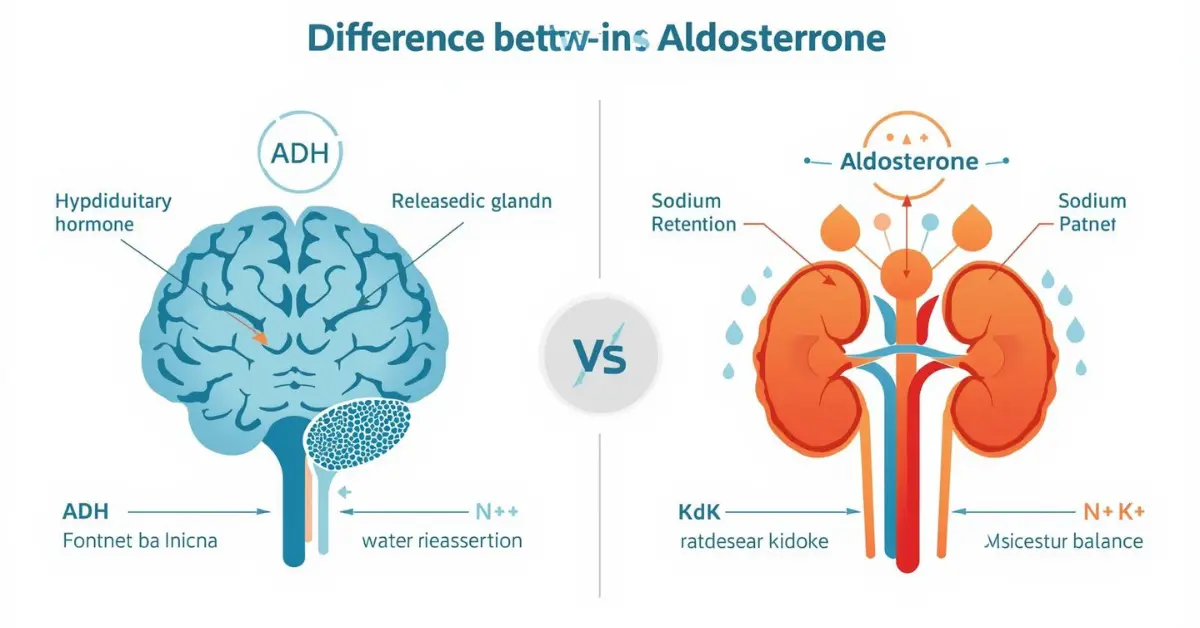
Here, two crucial hormones, ADH (Antidiuretic Hormone) and Aldosterone, step into action. While both are involved in fluid and electrolyte balance, their roles differ significantly. Understanding the difference between ADH and Aldosterone is essential for students, medical professionals, and even fitness enthusiasts who want to comprehend how our bodies maintain hydration and blood pressure.
Knowing the functions of ADH and Aldosterone not only explains bodily mechanisms but also highlights their relevance in medicine and society.
Pronunciation:
- ADH – US: /ˌeɪ.diːˈeɪtʃ/, UK: /ˌeɪ.diːˈeɪtʃ/
- Aldosterone – US: /ˌæl.dəˈstɪroʊn/, UK: /ˌæl.dəˈstɪərəʊn/
Both hormones are fascinating because they illustrate how our bodies balance water, salt, and blood pressure. Let’s dive deeper into the difference between ADH and Aldosterone.
H2: Difference Between ADH and Aldosterone
Here are 10 key points of difference between ADH and Aldosterone, with examples for clarity:
1. Source of Secretion
- ADH: Produced by the posterior pituitary gland.
Example: When dehydrated, ADH secretion increases.
Example: In diabetes insipidus, ADH deficiency causes excessive urination. - Aldosterone: Secreted by the adrenal cortex (zona glomerulosa).
Example: Low sodium in the blood triggers aldosterone release.
Example: In Addison’s disease, aldosterone secretion is impaired.
2. Primary Function
- ADH: Regulates water retention in kidneys.
Example: Prevents excessive urination at night.
Example: Controls dehydration during exercise. - Aldosterone: Regulates sodium and potassium balance, indirectly controlling water retention.
Example: Conserves sodium after heavy sweating.
Example: Removes potassium to prevent hyperkalemia.
3. Mechanism of Action
- ADH: Increases water reabsorption in the collecting ducts of the kidneys.
Example: Makes urine more concentrated.
Example: Reduces plasma osmolarity changes. - Aldosterone: Acts on distal tubules and collecting ducts to reabsorb sodium and excrete potassium.
Example: Sodium retention raises blood pressure.
Example: Potassium excretion prevents toxicity.
4. Stimuli for Release
- ADH: Triggered by high blood osmolarity or dehydration.
Example: Thirst after salty snacks.
Example: Fever increases ADH secretion. - Aldosterone: Triggered by low blood pressure, low sodium, or high potassium.
Example: Hemorrhage causes aldosterone secretion.
Example: Low salt diet increases aldosterone.
5. Effect on Blood Pressure
- ADH: Minor effect; mainly regulates water, slightly increases blood pressure.
Example: Helps maintain blood pressure during dehydration.
Example: ADH therapy in shock situations. - Aldosterone: Major effect; directly increases blood volume and pressure.
Example: Used in hypotension management.
Example: Contributes to hypertension if overproduced.
6. Chemical Nature
- ADH: A peptide hormone.
Example: Short-chain peptide secreted by the brain.
Example: Synthetic ADH used in treatment. - Aldosterone: A steroid hormone (mineralocorticoid).
Example: Derived from cholesterol.
Example: Crosses cell membranes easily.
7. Duration of Action
- ADH: Short-term, rapid action.
Example: Works within minutes during dehydration.
Example: Adjusts urine output dynamically. - Aldosterone: Long-term, slower action.
Example: Gradual effect on sodium retention.
Example: Maintains chronic blood pressure.
8. Excretion Effect
- ADH: Reduces urine volume.
Example: Nighttime ADH prevents bedwetting.
Example: Limits fluid loss after exercise. - Aldosterone: Increases sodium retention and potassium excretion.
Example: Prevents hyponatremia in low-salt diets.
Example: Helps maintain electrolyte balance.
9. Medical Conditions Linked
- ADH: Diabetes insipidus, SIADH (syndrome of inappropriate ADH).
Example: Excess ADH causes water retention.
Example: Deficiency causes dehydration. - Aldosterone: Addison’s disease, hyperaldosteronism.
Example: Overproduction causes high blood pressure.
Example: Underproduction leads to low sodium levels.
10. Interaction with Other Hormones
- ADH: Works with renin-angiotensin system indirectly.
Example: Enhances water retention.
Example: Supports blood pressure regulation. - Aldosterone: Part of RAAS (Renin-Angiotensin-Aldosterone System).
Example: Sodium retention increases blood volume.
Example: Maintains electrolyte homeostasis during stress.
Nature and Behavior
- ADH: Rapid-acting, water-focused, neuropeptide-based, sensitive to immediate dehydration.
- Aldosterone: Gradual-acting, salt-focused, steroid-based, essential for long-term electrolyte balance.
Why People Are Confused
Both hormones influence kidney function and blood pressure, making them easy to mix up. Also, medical terms like RAAS, water-sodium balance, and blood volume can overlap in explanations.
ADH vs Aldosterone: Comparison Table
| Feature | ADH | Aldosterone | Similarity |
| Source | Posterior pituitary | Adrenal cortex | Regulate kidney function |
| Function | Water retention | Sodium & potassium balance | Maintain blood pressure |
| Type | Peptide hormone | Steroid hormone | Hormonal regulators |
| Action Speed | Rapid | Slow | Affect fluid balance |
| Stimulus | High osmolarity | Low BP / low Na | Respond to body needs |
| Excretion Effect | Reduces urine | Sodium retained, K excreted | Maintain homeostasis |
| Blood Pressure | Minor increase | Major increase | Support circulatory system |
| Duration | Short-term | Long-term | Control fluid/electrolytes |
| Disorders | Diabetes insipidus, SIADH | Addison’s, hyperaldosteronism | Hormonal imbalance |
| Mechanism | Kidney collecting ducts | Distal tubule & collecting ducts | Influence kidneys |
Which is Better in What Situation?
- ADH is better for acute dehydration. During intense exercise or sudden water loss, ADH quickly conserves water to maintain hydration.
- Aldosterone is better for chronic salt balance and blood pressure management. People with long-term low sodium or hypotension benefit from aldosterone’s gradual action.
Metaphors, Similes, and Connotation
- ADH: Metaphor – “the body’s water gatekeeper.” Positive connotation.
- Aldosterone: Metaphor – “salt guardian of life.” Neutral/positive.
- Simile: “ADH works like a sponge, absorbing every drop of water.”
- Simile: “Aldosterone is like a vigilant banker, keeping sodium in reserve.”
Idioms / Proverbs
- “Every drop counts” – relates to ADH.
- “Salt of the earth” – relates to aldosterone (sodium balance).
Works in Literature
- Hormonal Healing (Health, author: Sara Gottfried, 2012) – mentions ADH and aldosterone.
- Guyton and Hall Textbook of Medical Physiology (Science, John E. Hall, 2021) – details hormone functions.
Movies (Inspired by Hormones / Medical Science)
- Awakenings (1990, US) – related to neurochemical effects, indirectly ADH.
- Something the Lord Made (2004, US) – explores medical interventions involving fluid balance.
FAQs
- Are ADH and Aldosterone the same?
No, ADH regulates water; aldosterone regulates sodium and potassium. - Which hormone increases blood pressure more?
Aldosterone has a stronger impact on blood pressure. - Can ADH work without aldosterone?
Yes, ADH manages water, but full fluid and electrolyte balance needs aldosterone. - Which hormone is faster acting?
ADH acts rapidly; aldosterone acts slowly. - Are these hormones only in humans?
No, both are present in most vertebrates.
How Both Are Useful for Surroundings
- Maintain hydration and blood pressure.
- Help survival in extreme conditions like dehydration or salt scarcity.
Final Words
ADH and Aldosterone are vital for life. While ADH protects water balance, aldosterone safeguards electrolyte and blood pressure stability. Together, they ensure the body thrives.
Conclusion
Understanding the difference between ADH and Aldosterone is crucial for learners, doctors, and anyone interested in health. While ADH prevents dehydration, aldosterone ensures electrolyte balance and steady blood pressure. Misunderstanding them can lead to medical errors or misinterpretation of symptoms. Both hormones, although often confused, complement each other beautifully, balancing immediate hydration with long-term sodium and potassium regulation. Recognizing their roles enhances awareness of bodily functions and highlights their importance in medicine, education, and everyday life.

My name is SwiftSphere, and I am a passionate English language author and the creator of Spellcompare.com. I specialize in word comparisons, grammar clarity, and simplifying confusing English terms for readers around the world.
As a professional writer, I focus on breaking down commonly misunderstood words, phrases, and language rules into clear, practical explanations. My goal is to make English easier, more accurate, and more accessible for students, professionals, and everyday learners.
Through Spellcompare.com, I provide well-researched, easy-to-understand content that helps readers confidently choose the right words in writing and speech. Whether it’s comparing similar spellings, explaining grammar rules, or clarifying tricky vocabulary, I am committed to delivering precise and reliable guidance.
I believe that strong language skills create strong communication — and strong communication creates opportunity. That belief drives my work every day.