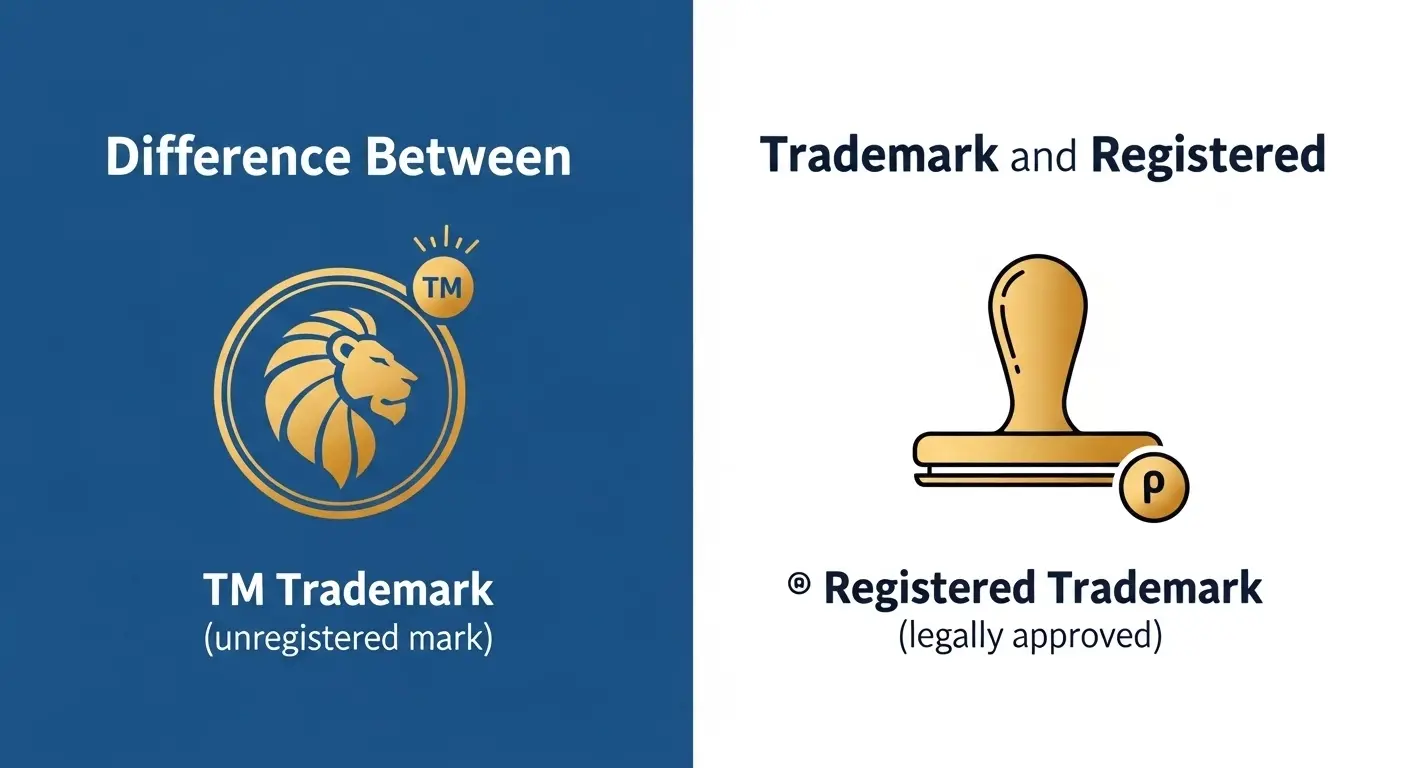
The difference between trademark and registered is often misunderstood, especially in business and branding. The term difference between trademark and registered becomes important when companies protect their identity in the market.
Many beginners confuse the difference between trademark and registered because both symbols relate to brand protection. In simple terms, trademarks help identify a brand, while “registered” confirms legal protection granted by the government.
Imagine a small bakery named “Sweet Bite” that uses a unique logo; this logo may be a trademark. Later, after official approval, it becomes a registered mark. Understanding the difference between trademark and registered helps businesses avoid legal issues, build trust, and protect brand identity in a competitive marketplace where copying is very common.
Key Difference Between Trademark and Registered
A trademark is a symbol, word, or design used to identify a business, while “registered” indicates that the trademark has been officially approved and protected by law.
Why Knowing the Difference Matters
Understanding the difference between trademark and registered is important for entrepreneurs, students, and professionals. In society, branding plays a major role in business success. If people do not understand this difference, they may misuse symbols or fail to protect their intellectual property. For learners, it builds legal awareness. For experts, it ensures proper brand management and compliance with law. In today’s digital world, where copying logos and names is common, knowing this difference helps maintain originality, fairness, and trust in the marketplace.
Pronunciation
Trademark
- US: /ˈtreɪd.mɑːrk/
- UK: /ˈtreɪd.mɑːk/
Registered
- US: /ˈredʒ.ɪ.stɚd/
- UK: /ˈredʒ.ɪ.stəd/
Linking Hook
Now that we understand the basic idea, let’s explore the difference between trademark and registered in detail with clear comparisons and examples.
Difference Between Trademark and Registered (10 Key Points)
1. Meaning
- Trademark: A symbol or name used to identify a brand.
- Example: Nike “Swoosh” logo
- Example: McDonald’s golden arches
- Registered: A trademark that is legally approved.
- Example: Nike® after approval
- Example: Apple® brand protection mark
2. Legal Status
- Trademark: May or may not be legally protected
- Example: “Fresh Juice” used locally
- Example: Handmade logo on a shop sign
- Registered: Fully protected by law
- Example: Coca-Cola®
- Example: Samsung®
3. Symbol Used
- Trademark: ™ symbol
- Example: BrandX™
- Example: Logo™
- Registered: ® symbol
- Example: BrandX®
- Example: Product®
4. Protection Level
- Trademark: Limited protection
- Example: Local bakery name
- Example: Small clothing brand logo
- Registered: Strong legal protection
- Example: Global tech brands
- Example: International food chains
5. Government Approval
- Trademark: No approval needed initially
- Example: Startup logo
- Example: Freelance brand name
- Registered: Requires official approval
- Example: Registered business name
- Example: Patent office approved logo
6. Ownership Proof
- Trademark: Weak ownership proof
- Example: Unregistered design
- Example: Early-stage branding
- Registered: Strong ownership proof
- Example: Legally registered brand
- Example: Protected company identity
7. Duration
- Trademark: Continues as long as used
- Example: Old shop names
- Example: Family business logo
- Registered: Needs renewal after years
- Example: Renewed every 10 years
- Example: Corporate trademarks
8. Enforcement Rights
- Trademark: Harder to enforce legally
- Example: Local disputes
- Example: Informal copying cases
- Registered: Easier to take legal action
- Example: Brand infringement lawsuits
- Example: Counterfeit cases
9. Cost
- Trademark: Low or no cost
- Example: Self-created logo
- Example: Basic brand identity
- Registered: Higher cost due to legal process
- Example: Filing fees
- Example: Legal registration charges
10. Recognition
- Trademark: Basic recognition
- Example: Local market branding
- Example: Small businesses
- Registered: High recognition
- Example: International brands
- Example: Franchise companies
Nature and Behaviour
Trademark:
A trademark behaves like an informal identity of a business. It is flexible, easy to create, and widely used even without legal approval. It helps businesses build early recognition.
Registered:
A registered mark behaves like a legal shield. It is strict, official, and provides complete ownership rights. It protects businesses from copying and misuse.
Why People Get Confused
People often confuse trademark and registered because both use similar symbols and both relate to brand identity. Many assume that a trademark is always legally registered, but that is not true. Lack of legal knowledge and similar branding symbols increase this confusion.
Difference and Similarity Table
| Feature | Trademark | Registered |
| Symbol | ™ | ® |
| Legal Status | Not always legal | Fully legal |
| Protection | Limited | Strong |
| Approval | Not required | Required |
| Cost | Low | Higher |
| Usage | Early branding | Established branding |
Similarity: Both protect brand identity and help customers recognize products or services.
Which is Better in What Situation?
A trademark is better for startups and small businesses that are just beginning their branding journey. It allows quick identity creation without legal delay. On the other hand, a registered mark is better for established businesses that want full legal protection and long-term security. Companies entering competitive markets should prefer registration to prevent copying. However, both are important at different stages of business growth.
Use in Metaphors and Similes
- Trademarks can symbolize “identity in progress,” like a sketch before a final painting.
- Example: “Her style was a trademark of creativity.”
- Registered represents “complete ownership,” like a locked treasure chest.
- Example: “His success became a registered mark of excellence.”
Connotative Meaning
Trademark:
- Positive: Creativity, identity, uniqueness
- Neutral: Business symbol
- Negative: Unprotected or informal use
Registered:
- Positive: Authority, trust, security
- Neutral: Legal status
- Negative: Formality or bureaucracy
Idioms or Proverbs
There are no widely known idioms directly using these terms, but modern business language uses them symbolically:
- “Make it your trademark” → meaning a personal signature style
- Example: “Hard work is his trademark.”
- “Go registered” (informal usage in business talk) → meaning to secure legally
- Example: “They finally made their brand registered.”
Works in Literature (Related Usage Themes)
- Business Law and Intellectual Property (Genre: Legal Literature, Author: WIPO Publications, 2000s–present)
- Trademark Law Essentials (Genre: Legal Textbook, Various Authors, 2010s–present)
- Intellectual Property Rights in Modern Business (Genre: Academic Research, 2000s–present)
Movies Related to Intellectual Property/Brand Protection
There are no major films specifically titled “Trademark” or “Registered.” However, intellectual property themes appear in:
- The Social Network (2010, USA) – shows brand creation and ownership issues
- Flash of Genius (2008, USA) – legal fight over invention rights
- Pirates of Silicon Valley (1999, USA) – technology and idea ownership
Frequently Asked Questions (FAQs)
1. What is the main difference between trademark and registered?
Trademark is a brand symbol; registered means it is legally protected.
2. Is every trademark registered?
No, many trademarks are unregistered.
3. Which symbol shows registration?
The ® symbol shows registration.
4. Can I use ™ without registration?
Yes, it can be used without legal approval.
5. Why is registration important?
It gives legal protection and ownership rights.
How Both Are Useful for Surroundings
Trademarks and registered marks help society by organizing businesses and preventing confusion among consumers. They encourage fair competition and protect creativity. Customers can easily identify trusted products, and businesses are motivated to innovate without fear of copying.
Final Words
Both trademark and registered terms play an essential role in branding and intellectual property protection. They are not rivals but stages of the same process. Understanding both helps businesses grow safely and legally in a competitive market.
Conclusion
In conclusion, the difference between trademark and registered is essential for understanding brand protection systems. A trademark represents a brand identity, while a registered mark confirms legal ownership and protection.
Businesses often start with trademarks and later move toward registration for stronger security. Knowing this difference helps entrepreneurs avoid legal risks and build trustworthy brands. In today’s global economy, where competition is high, proper understanding of intellectual property ensures fairness, creativity, and long-term success. Therefore, learning the difference between trademark and registered is crucial for anyone involved in business or marketing.

My name is SwiftSphere, and I am a passionate English language author and the creator of Spellcompare.com. I specialize in word comparisons, grammar clarity, and simplifying confusing English terms for readers around the world.
As a professional writer, I focus on breaking down commonly misunderstood words, phrases, and language rules into clear, practical explanations. My goal is to make English easier, more accurate, and more accessible for students, professionals, and everyday learners.
Through Spellcompare.com, I provide well-researched, easy-to-understand content that helps readers confidently choose the right words in writing and speech. Whether it’s comparing similar spellings, explaining grammar rules, or clarifying tricky vocabulary, I am committed to delivering precise and reliable guidance.
I believe that strong language skills create strong communication — and strong communication creates opportunity. That belief drives my work every day.