Imagine walking down a street and noticing how neat and well-finished some houses look. The roof edges appear clean, protected, and well-structured. Most people admire the design but rarely think about the hidden architectural elements that make it possible.
Two of those elements are the soffit and the fascia. These small but essential parts of a roofline protect homes from weather damage and improve ventilation.
Understanding the difference between soffit and fascia is important because both serve different purposes in roofing systems. Many homeowners confuse them because they are installed close to each other. However, the difference between soffit and fascia becomes clear when you understand their position and function.
Builders, architects, and even homeowners benefit from knowing the difference between soffit and fascia to maintain a durable roof structure. Learning the difference between soffit and fascia also helps when repairing roofs or planning new construction.
Pronunciation of the Words
Soffit
- US: /ˈsɒfɪt/
- UK: /ˈsɒfɪt/
Fascia
- US: /ˈfeɪʃə/
- UK: /ˈfeɪʃə/
Understanding these terms may seem technical at first, but once you explore their functions and placement, the difference between soffit and fascia becomes simple and practical. Let’s move to the main comparison.
Difference Between Soffit and Fascia
1. Position in the Roof Structure
Soffit:
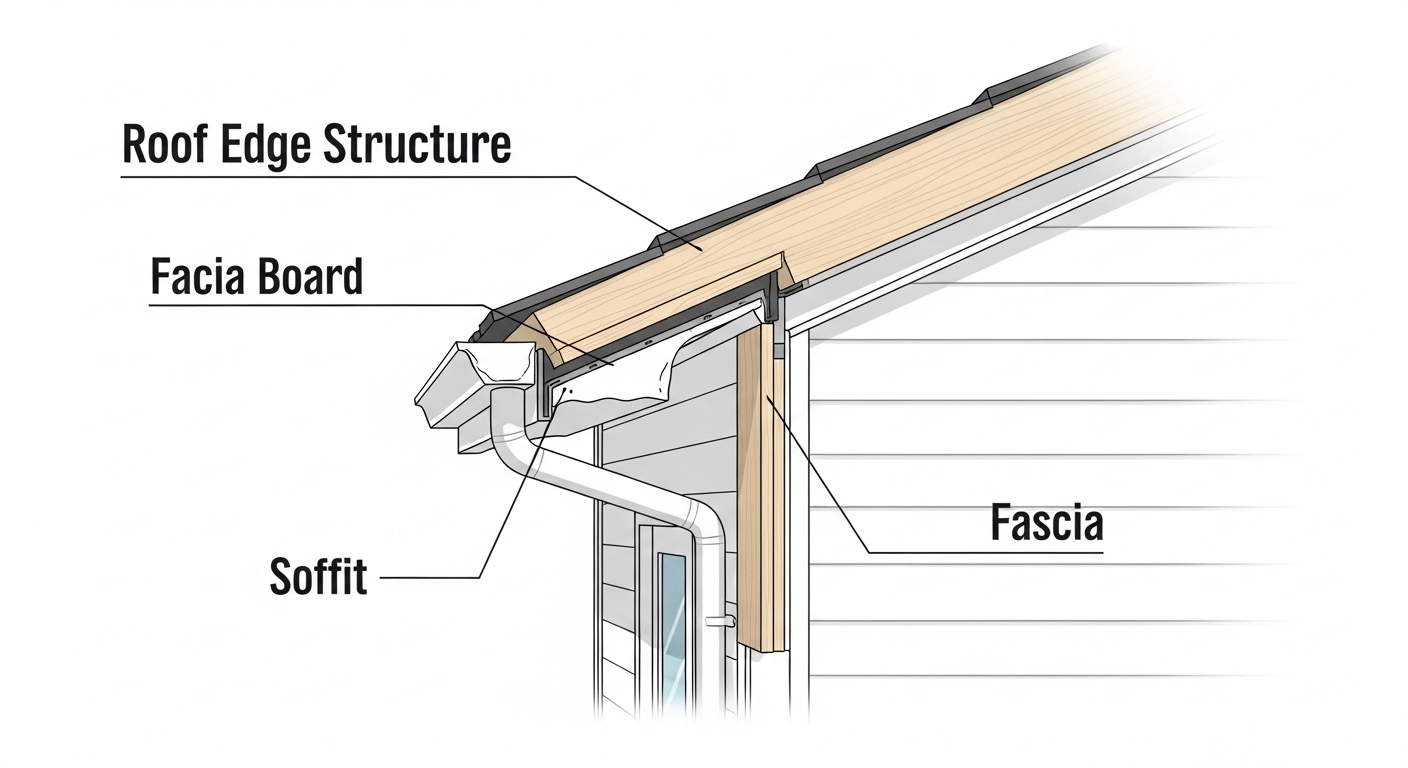
The soffit is located under the roof overhang. It connects the roof edge to the exterior wall.
Examples:
- The underside panel beneath a roof extension is the soffit.
- Ventilation holes under the eaves are part of the soffit.
Fascia:
The fascia is the vertical board attached to the ends of roof rafters.
Examples:
- The board where gutters are mounted is fascia.
- The front edge of a roofline is usually covered with fascia boards.
2. Main Function
Soffit:
It provides ventilation for the attic and protects the underside of the roof.
Examples:
- Vented soffits allow air circulation.
- Soffits prevent moisture buildup in attics.
Fascia:
It supports the roof edge and holds the gutter system.
Examples:
- Fascia boards keep gutters stable.
- Fascia creates a clean finishing edge.
3. Orientation
Soffit:
Installed horizontally under the roof overhang.
Examples:
- A flat panel beneath the roof extension.
- A horizontal covering under eaves.
Fascia:
Installed vertically along the roof edge.
Examples:
- A straight board along the roof ends.
- The vertical trim where gutters attach.
4. Ventilation Role
Soffit:
Often includes vents to allow airflow.
Examples:
- Perforated soffit panels.
- Vent openings for attic air circulation.
Fascia:
Does not provide ventilation.
Examples:
- Solid fascia boards.
- Decorative trim pieces.
5. Materials Used
Soffit:
Common materials include vinyl, aluminum, or wood panels.
Examples:
- Vinyl soffit panels in modern houses.
- Aluminum soffits for durability.
Fascia:
Usually made of wood, PVC, or aluminum boards.
Examples:
- Wooden fascia boards in traditional homes.
- PVC fascia for weather resistance.
6. Structural Role
Soffit:
Mostly decorative and protective.
Examples:
- Covers exposed rafters.
- Improves roof aesthetics.
Fascia:
More structural because it supports gutters.
Examples:
- Holds gutter brackets.
- Protects the roof edge.
7. Maintenance Needs
Soffit:
Needs cleaning to prevent insect nests or dust.
Examples:
- Clearing vent holes.
- Checking for moisture damage.
Fascia:
Needs inspection for rot or water damage.
Examples:
- Repainting wooden fascia boards.
- Replacing damaged fascia near gutters.
8. Visibility
Soffit:
Visible from directly below the roof.
Examples:
- Seen when standing near a wall.
- Visible under roof edges.
Fascia:
Visible from the front edge of the roofline.
Examples:
- Seen from the street view.
- Appears as a border along the roof.
9. Protection Role
Soffit:
Protects rafters from weather and pests.
Examples:
- Prevents birds from nesting.
- Shields roof underside from rain.
Fascia:
Protects roof edges and rafters.
Examples:
- Blocks water from entering roof edges.
- Strengthens the roof boundary.
10. Installation Timing
Soffit:
Installed after roof framing but before finishing exterior walls.
Examples:
- Added during exterior finishing.
- Installed with vent systems.
Fascia:
Installed directly to rafters before gutters.
Examples:
- Attached during roof construction.
- Installed before gutter systems.
Nature and Behaviour of Both
Soffit Nature:
Soffits mainly serve ventilation and protective roles. They help regulate airflow in attic spaces, preventing moisture buildup and maintaining roof health.
Fascia Nature:
Fascia boards act as protective trim and structural support. They give the roof a finished look and provide a base for gutter systems.
Why People Are Confused About Their Use
People often confuse soffit and fascia because they are installed close to each other along the roofline. Both are part of the eaves and contribute to roof protection and aesthetics. Additionally, homeowners usually notice them only during repairs, making it difficult to remember which part performs which role.
Difference and Similarity Table
| Feature | Soffit | Fascia | Similarity |
| Location | Under the roof overhang | Along roof edge | Both part of roofline |
| Orientation | Horizontal | Vertical | Both installed near eaves |
| Function | Ventilation and protection | Structural support and gutter base | Protect roof edges |
| Materials | Vinyl, aluminum, wood | Wood, PVC, aluminum | Weather-resistant materials |
| Visibility | Seen from below | Seen from front | Contribute to appearance |
Which is Better in What Situation?
Soffit:
Soffits are better when ventilation is required. Homes with attic spaces need soffit vents to regulate temperature and prevent moisture accumulation. Proper soffit installation helps improve air circulation, which protects insulation and roof structures.
Fascia:
Fascia boards are better when structural support is needed for gutters and roof edges. Without fascia, gutters cannot be properly attached, and rainwater could damage the roofline and exterior walls.
Metaphors and Similes
Soffit:
- “The soffit works like the lungs of a house.”
- “It is like a protective ceiling beneath the roof.”
Fascia:
- “The fascia is the face of the roof.”
- “It acts like a frame around the roofline.”
Connotative Meaning
Soffit (Neutral):
Associated with ventilation and hidden structural support.
Example: “The soffit quietly protects the roof from inside.”
Fascia (Positive):
Often linked with structure, strength, and finishing touches.
Example: “The fascia gives the roof a strong and polished edge.”
Idioms or Proverbs Related to the Words
There are no common idioms directly based on soffit or fascia, but related construction expressions exist.
Examples:
- “Strong foundations build lasting homes.”
- “A house is only as strong as its structure.”
Works in Literature Mentioning the Words
- Architecture: Form, Space, and Order – Francis D.K. Ching (Architecture, 1979)
- Building Construction Illustrated – Francis D.K. Ching (Architecture, 1975)
Movies Referencing the Terms
Direct movies about soffit or fascia are rare, but architecture and construction films include them:
- The Money Pit (1986, USA)
- Dream House (2011, USA)
Frequently Asked Questions
1. What is the main difference between soffit and fascia?
Soffit provides ventilation under the roof, while fascia supports the roof edge and holds gutters.
2. Are soffit and fascia always installed together?
Yes, they are usually installed together as part of the roof’s eave system.
3. Can a house have fascia without soffit?
Yes, some roof designs use fascia without soffit, but ventilation may be limited.
4. Which material is best for soffit?
Vinyl and aluminum are popular because they are durable and require little maintenance.
5. Why does fascia often get damaged?
Fascia can rot due to water exposure from clogged or leaking gutters.
How Both Are Useful for Surroundings
Soffit and fascia contribute to healthier homes and surroundings. Proper soffit ventilation reduces moisture and mold growth. Fascia ensures rainwater flows correctly through gutters, protecting walls, gardens, and building foundations.
Final Words for Both
Soffit and fascia may seem like minor roofing components, but they play essential roles in protecting buildings. Together they improve ventilation, structural strength, and exterior appearance.
Conclusion
Understanding the difference between soffit and fascia is valuable for homeowners, builders, and students of construction. While soffit mainly focuses on ventilation and protecting the underside of the roof, fascia provides structural support and a finished edge to the roofline.
Both elements work together to keep roofs durable and visually appealing. Recognizing their functions helps people maintain roofs more effectively and avoid costly damage. In modern construction, proper installation of soffit and fascia ensures long-lasting protection, efficient ventilation, and better home aesthetics.

My name is SwiftSphere, and I am a passionate English language author and the creator of Spellcompare.com. I specialize in word comparisons, grammar clarity, and simplifying confusing English terms for readers around the world.
As a professional writer, I focus on breaking down commonly misunderstood words, phrases, and language rules into clear, practical explanations. My goal is to make English easier, more accurate, and more accessible for students, professionals, and everyday learners.
Through Spellcompare.com, I provide well-researched, easy-to-understand content that helps readers confidently choose the right words in writing and speech. Whether it’s comparing similar spellings, explaining grammar rules, or clarifying tricky vocabulary, I am committed to delivering precise and reliable guidance.
I believe that strong language skills create strong communication — and strong communication creates opportunity. That belief drives my work every day.