On a busy morning in a clothing store, two friends were shopping for new outfits. One of them tried on a pair of jeans labeled “slim fit,” while the other joked that the style made him look “skinny.”
That small conversation shows how people often mix up these two words. The difference between skinny and slim may seem small, but the meanings and the feelings attached to these words can be quite different.
In everyday language, skinny usually refers to someone who is very thin, sometimes even too thin. In contrast, slim describes a person who is attractively thin and well-proportioned. Understanding the difference between skinny and slim is useful in communication, fashion, health discussions, and social interactions.
Many learners and writers search for the difference between skinny and slim because these words look similar but carry different tones. Knowing the difference between skinny and slim helps people choose words carefully and avoid misunderstanding in conversations or writing.
Key Difference Between the Both
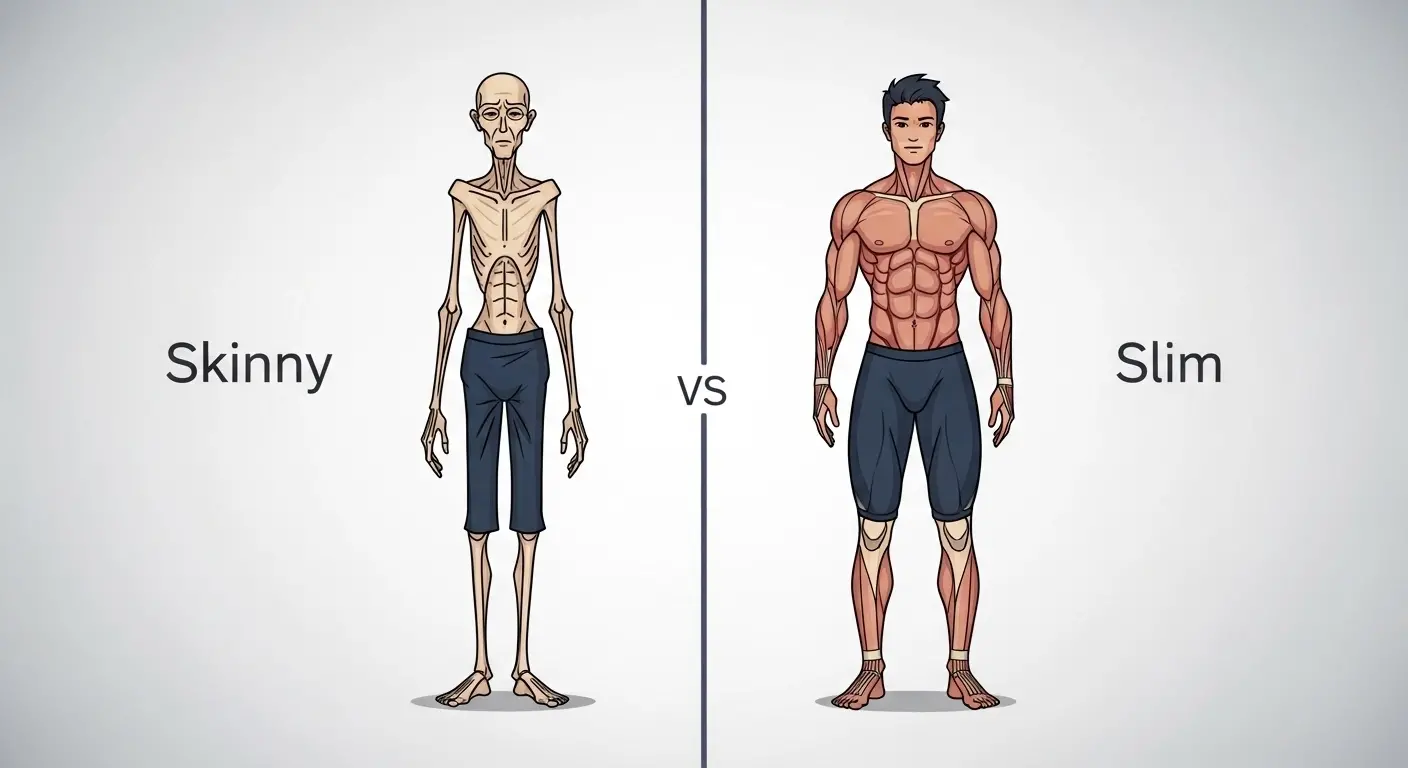
The main difference is that skinny often suggests extreme thinness and may have a slightly negative tone, while slim usually describes a healthy, attractive, and balanced thin body.
Why Their Difference Is Necessary to Know for Learners and Experts
Understanding the difference between skinny and slim is important because language shapes how we describe people. In society, the word slim is often used positively in fashion, health, and compliments. On the other hand, skinny can sometimes sound critical or informal. For learners of English, knowing this distinction helps avoid unintended offense. For professionals in fields like writing, marketing, or education, accurate word choice helps convey the correct tone and meaning. This difference also reflects cultural attitudes about body image and health, making it socially important.
Pronunciation (US & UK)
Skinny
- US: /ˈskɪni/
- UK: /ˈskɪni/
Slim
- US: /slɪm/
- UK: /slɪm/
Before we dive deeper, let’s explore the detailed difference between skinny and slim through clear comparisons and examples.
Difference Between Skinny and Slim
1. Degree of Thinness
Skinny refers to a very thin or bony appearance.
Examples:
- He looked skinny after being sick for weeks.
- The stray dog was extremely skinny.
Slim refers to a balanced and attractive thin body.
Examples:
- She has a slim figure from regular exercise.
- The athlete maintained a slim and healthy body.
2. Tone of Meaning
Skinny may sometimes sound negative or critical.
Examples:
- People said he looked too skinny for his age.
- The shirt made him appear skinny and weak.
Slim usually sounds positive or complimentary.
Examples:
- The dress makes her look slim.
- He kept a slim shape through daily jogging.
3. Health Implication
Skinny can suggest weakness or lack of strength.
Examples:
- The patient became skinny after the illness.
- The cat looked skinny and needed food.
Slim suggests healthy fitness.
Examples:
- Yoga helped her stay slim and energetic.
- He remained slim by following a balanced diet.
4. Use in Fashion
Skinny often describes tight clothing styles.
Examples:
- She wore skinny jeans to the party.
- Skinny pants are popular among teenagers.
Slim refers to tailored or fitted clothing.
Examples:
- He bought a slim-fit suit.
- The shop sells slim-fit shirts for professionals.
5. Formal vs Informal Usage
Skinny is more informal in tone.
Examples:
- He’s too skinny to lift heavy weights.
- My brother used to be very skinny.
Slim is more neutral and formal.
Examples:
- The report described the model as slim.
- The advertisement praised her slim figure.
6. Body Structure
Skinny suggests visible bones or lack of muscle.
Examples:
- His skinny arms showed his thin build.
- The child looked skinny in oversized clothes.
Slim suggests proportionate body shape.
Examples:
- The dancer has a slim waist.
- She keeps a slim body through fitness.
7. Emotional Impact
Skinny can hurt someone’s feelings if used carelessly.
Examples:
- Calling someone skinny may sound rude.
- He felt embarrassed when classmates called him skinny.
Slim usually sounds polite or flattering.
Examples:
- Saying someone is slim is often a compliment.
- The magazine praised her slim body.
8. Cultural Perception
Skinny sometimes relates to malnutrition in some contexts.
Examples:
- The villagers looked skinny due to food shortage.
- The rescued animals were skinny and weak.
Slim represents beauty standards in many cultures.
Examples:
- Fashion models are often described as slim.
- The actor is known for his slim build.
9. Use in Idioms or Slang
Skinny appears in informal phrases.
Examples:
- “Give me the skinny on that news.”
- He asked about the event.
Slim appears in formal phrases like slim chance.
Examples:
- There is a slim chance of rain today.
- She had a slim chance of winning.
10. Associated Lifestyle
Skinny may imply lack of nutrition or muscle.
Examples:
- He remained skinny despite eating a lot.
- The child stayed skinny due to illness.
Slim often connects with fitness and discipline.
Examples:
- Running helps her stay slim.
- He keeps a slim body through gym workouts.
Nature and Behaviour of Both Words
Skinny:
This word usually describes extreme thinness and may sometimes express concern, humor, or criticism.
Slim:
This word describes graceful thinness and is often used in compliments, fashion, and health discussions.
Why People Are Confused About Their Use
People often confuse these words because both describe a thin body shape. In casual conversation, they may seem interchangeable. However, the tone and implication differ. Skinny can suggest excessive thinness, while slim highlights attractiveness and balance.
Table: Difference and Similarity
| Aspect | Skinny | Slim | Similarity |
| Meaning | Very thin | Attractively thin | Both describe thin body |
| Tone | Sometimes negative | Positive or neutral | Used in descriptions |
| Health sense | May imply weakness | Suggests fitness | Related to body shape |
| Usage | Informal | Formal or neutral | Common adjectives |
Which Is Better in What Situation?
Skinny is better used in casual conversation or when describing extreme thinness honestly. It can also describe clothing styles like skinny jeans. However, it should be used carefully when talking about people because it may sound critical or insensitive.
Slim is better in polite conversations, compliments, or professional writing. It has a positive tone and is often used in fashion, health, and advertising. If you want to describe someone in a respectful and flattering way, slim is usually the safer word.
Use in Metaphors and Similes
Skinny
- “He was skinny as a stick.”
- “The tree looked skinny like a pencil.”
Slim
- “She moved with a slim grace like a dancer.”
- “The tower stood slim like a needle.”
Connotative Meaning
Skinny – Often negative or neutral
Examples:
- The skinny boy looked tired.
- The dog was skinny after wandering for days.
Slim – Positive or neutral
Examples:
- She kept a slim body through exercise.
- The model looked elegant and slim.
Idioms or Proverbs Related to the Words
Slim chance
Example: There is a slim chance that the match will continue in heavy rain.
Get the skinny (informal)
Example: Tell me the skinny about the meeting yesterday.
Works in Literature
Skinny
- Skinny Legs and All — Novel, Tom Robbins, 1990
Slim
- Slim: Memories of a Rich and Imperfect Life — Memoir, Nancy “Slim” Keith, 1990
Movies with Related Titles
- Skinny Tiger and Fatty Dragon — 1990, Hong Kong
- Slim Susie — 2003, Sweden
Frequently Asked Questions
1. Is skinny the same as slim?
No. Skinny often means extremely thin, while slim suggests healthy and attractive thinness.
2. Is slim a compliment?
Yes, slim usually sounds like a positive compliment.
3. Can skinny be rude?
Sometimes yes, especially if it implies unhealthy thinness.
4. Are skinny jeans related to the word skinny?
Yes, they are tight-fitting jeans named after the close shape.
5. Which word is better in formal writing?
Slim is generally more appropriate in formal writing.
How Both Are Useful for Surroundings
Both words help describe physical appearance, fashion styles, and body types. They allow people to communicate visual details clearly in conversations, writing, media, and marketing.
Final Words for Both
Skinny highlights extreme thinness and sometimes carries emotional or negative undertones. Slim, however, emphasizes balance, elegance, and attractiveness.
Conclusion
Understanding the difference between skinny and slim helps improve communication and word choice. Although both words describe thin body shapes, their meanings and social implications are different. Skinny often suggests excessive thinness or weakness, while slim usually expresses attractiveness and healthy proportions.
This distinction is important for learners, writers, and professionals because language can influence how people feel and how messages are perceived.
By recognizing when to use each word, speakers can communicate more respectfully and accurately. Ultimately, knowing the difference between skinny and slim strengthens both vocabulary and social awareness.

SwiftHarbor is a dedicated English professor, language researcher, and the founder of SpellCompare.com. With years of academic experience in English grammar, vocabulary development, and linguistic comparison, SwiftHarbor specializes in simplifying complex language rules into clear, practical explanations.
As an expert in word usage, spelling differences, and commonly confused terms, SwiftHarbor has helped thousands of learners improve their writing accuracy and communication skills. Through SpellCompare.com, he provides detailed comparisons, easy examples, and research-based insights that make English learning accessible for students, writers, and professionals worldwide.
Known for a clear teaching style and structured explanations, SwiftHarbor focuses on eliminating confusion between similar words, improving grammar confidence, and promoting precise communication. His mission is simple: to make English easier, clearer, and more powerful for everyone.