In today’s world, we are constantly bombarded with labels like organic and natural on food, skincare, and household products. But how many of us truly understand the difference between organic and natural? Imagine walking through a grocery store aisle, seeing “100% organic” on a box of cereal and “all-natural” on a fruit juice. At first glance, both seem healthy and chemical-free.
However, the difference between organic and natural goes beyond mere labeling it affects our health, environment, and lifestyle choices. By learning the difference, we can make informed decisions, reduce confusion, and choose products that truly align with our values. In this blog, we’ll explore these distinctions in detail, providing examples, comparisons, and insights for learners, experts, and everyday consumers.
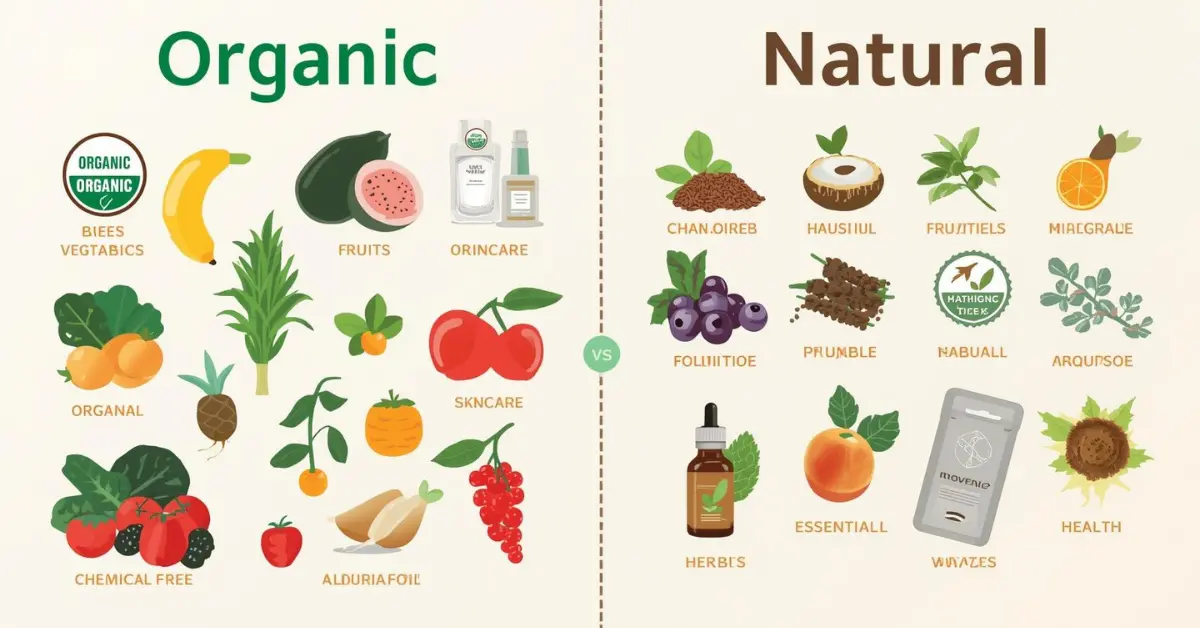
The term organic refers to products made or grown without synthetic chemicals, pesticides, or genetically modified organisms (GMOs), while natural generally refers to products that exist in nature but may not follow strict production standards. Understanding this subtle yet impactful distinction is crucial for anyone seeking healthier living or environmental sustainability.
Pronunciation:
- Organic: US /ɔːrˈɡænɪk/, UK /ɔːˈɡænɪk/
- Natural: US /ˈnætʃrəl/, UK /ˈnætʃrəl/
Let’s dive deeper to understand why the difference between organic and natural matters and how it influences our choices.
Difference Between Organic and Natural
Here are ten key points of difference between organic and natural, explained with examples:
- Definition and Certification
- Organic: Certified by authorities; strictly regulated.
- Example 1: Organic apples grown without pesticides, verified by USDA.
- Example 2: Organic milk labeled by EU organic standards.
- Natural: May or may not be regulated.
- Example 1: Freshly squeezed juice without additives.
- Example 2: Herbal teas from naturally grown plants without certification.
- Organic: Certified by authorities; strictly regulated.
- Use of Chemicals
- Organic: No synthetic chemicals or GMOs.
- Example 1: Organic carrots free of chemical fertilizers.
- Example 2: Organic skincare uses only plant-derived preservatives.
- Natural: Can contain some chemical processing.
- Example 1: Natural soaps may use some preservatives.
- Example 2: Natural oils refined for shelf-life.
- Organic: No synthetic chemicals or GMOs.
- Environmental Impact
- Organic: Supports sustainable farming.
- Example 1: Organic farms reduce soil degradation.
- Example 2: Organic cotton farming reduces water contamination.
- Natural: Not necessarily eco-friendly.
- Example 1: Naturally harvested wood may not be sustainably sourced.
- Example 2: Natural fruits sprayed with non-organic fertilizers.
- Organic: Supports sustainable farming.
- Health Benefits
- Organic: Lower chemical residues, often healthier.
- Example 1: Organic vegetables retain more nutrients.
- Example 2: Organic eggs have higher omega-3 content.
- Natural: Healthier than processed but less regulated.
- Example 1: Natural honey may contain pollen and beneficial enzymes.
- Example 2: Natural dairy without additives but not certified organic.
- Organic: Lower chemical residues, often healthier.
- Price
- Organic: Usually more expensive due to strict farming practices.
- Example 1: Organic strawberries cost 20–30% more.
- Example 2: Organic skincare creams have higher production costs.
- Natural: Generally more affordable.
- Example 1: Natural peanut butter costs less than organic.
- Example 2: Natural herbal supplements are often cheaper.
- Organic: Usually more expensive due to strict farming practices.
- Taste and Quality
- Organic: Often fresher and richer in flavor.
- Example 1: Organic tomatoes are sweeter.
- Example 2: Organic chocolate tastes purer.
- Natural: Taste varies; quality not guaranteed.
- Example 1: Natural juice can be less consistent in flavor.
- Example 2: Natural cereals may contain processed ingredients.
- Organic: Often fresher and richer in flavor.
- Longevity
- Organic: Shorter shelf-life due to minimal preservatives.
- Example 1: Organic bread lasts 3–4 days.
- Example 2: Organic milk spoils faster.
- Natural: Longer shelf-life if processed.
- Example 1: Natural jams may last months with additives.
- Example 2: Natural oils refined for storage.
- Organic: Shorter shelf-life due to minimal preservatives.
- Production Standards
- Organic: Must follow strict guidelines (fertilizers, pesticides, GMOs).
- Example 1: Organic farms maintain crop rotation.
- Example 2: Organic tea avoids chemical pesticides.
- Natural: No strict rules.
- Example 1: Natural fruits may use permitted chemicals.
- Example 2: Natural cosmetics may contain minimal synthetic ingredients.
- Organic: Must follow strict guidelines (fertilizers, pesticides, GMOs).
- Labeling Transparency
- Organic: Certified and labeled.
- Example 1: USDA organic logo on milk.
- Example 2: Certified organic skincare logo.
- Natural: Labeling is often vague.
- Example 1: “All-natural” snack bars may contain sugar.
- Example 2: Natural toothpaste may still include synthetic flavors.
- Organic: Certified and labeled.
- Consumer Perception
- Organic: Seen as premium and safer.
- Example 1: Organic baby food trusted by parents.
- Example 2: Organic cotton clothes preferred for sensitive skin.
- Natural: Seen as healthier than processed, but less trustworthy.
- Example 1: Natural juices popular among casual buyers.
- Example 2: Natural soaps used widely for daily hygiene.
Nature and Behavior of Both
- Organic: Strict, regulated, environmentally conscious, and premium in nature. Focuses on sustainability and chemical-free practices.
- Natural: Flexible, broader in application, often used for marketing, may not always be fully chemical-free or regulated.
Why People Are Confused
Most confusion arises because both organic and natural suggest “healthy” or “eco-friendly” to consumers. Mislabeling, lack of standardization for natural products, and marketing tactics add to the misunderstanding.
Difference and Similarity Table
| Feature | Organic | Natural | Similarity |
| Certification | Required | Not required | Both are marketed as healthier alternatives |
| Chemicals | None | May contain some | Both aim to reduce synthetic additives |
| Environmental impact | Eco-friendly | Varies | Both can be sourced from nature |
| Price | Higher | Lower | Both often cost more than processed |
| Shelf-life | Short | Longer | Both can be marketed as premium |
| Health benefits | High | Moderate | Both better than processed products |
| Label clarity | Clear | Vague | Both attract health-conscious consumers |
Which Is Better in What Situation?
- Organic: Best when you want strict assurance of chemical-free, nutrient-rich, and environmentally sustainable products. Ideal for children, sensitive individuals, or long-term health-focused consumers.
- Natural: Suitable for casual use, budget-conscious buyers, or when strict organic certification is unavailable. Good for everyday items where certification is less critical, like household cleaners or snacks.
Metaphors and Similes
- Organic: “Pure as an organic apple” – implying untainted and wholesome.
- Natural: “Flowing like natural water” – conveying effortless, unprocessed ease.
Connotative Meaning
- Organic: Positive; connotes purity, health, and environmental responsibility.
- Example: Organic farming nurtures the Earth.
- Natural: Positive/Neutral; connotes simplicity and authenticity, but may be ambiguous.
- Example: Natural landscapes inspire peace.
Idioms and Proverbs
- Organic: “Reap what you sow” – connects to organic farming principles.
- Natural: “As natural as breathing” – indicates something effortless and inherent.
Works in Literature
- “Organic Gardening” – Non-fiction, Eliot Coleman, 2000
- “The Natural” – Fiction/Sports, Bernard Malamud, 1952
Movies Related
- The Natural (1984, USA) – Sports/Drama
- Organic (2018, USA) – Documentary
FAQs
1. Are all natural products organic?
No, natural products may not be certified organic or free of all chemicals.
2. Is organic always healthier than natural?
Generally yes, due to strict chemical-free practices, but natural products can still be healthy.
3. Can natural products harm the environment?
Yes, if sourcing methods are unsustainable.
4. Why are organic products more expensive?
Due to certification costs, chemical-free farming, and sustainability practices.
5. Can we use both interchangeably?
No, because organic implies regulation and certification, while natural is broader and less controlled.
How Both Are Useful for Surroundings
- Organic: Preserves soil, reduces water contamination, supports biodiversity.
- Natural: Encourages use of non-processed resources, reduces dependence on synthetic chemicals.
Final Words
Understanding the difference between organic and natural helps consumers make informed choices, protect health, and support sustainable practices. Both have unique advantages, and knowing when to use each ensures better personal and environmental outcomes.
Conclusion
The difference between organic and natural is subtle but significant. Organic guarantees chemical-free, certified production, supporting health and sustainability. Natural emphasizes authenticity and unprocessed sources but may lack certification.
Consumers benefit from understanding these distinctions to make choices that align with their values, health goals, and environmental responsibility. Whether choosing organic vegetables for nutrient density or natural products for everyday use, awareness empowers better decisions and a healthier lifestyle.

SwiftHarbor is a dedicated English professor, language researcher, and the founder of SpellCompare.com. With years of academic experience in English grammar, vocabulary development, and linguistic comparison, SwiftHarbor specializes in simplifying complex language rules into clear, practical explanations.
As an expert in word usage, spelling differences, and commonly confused terms, SwiftHarbor has helped thousands of learners improve their writing accuracy and communication skills. Through SpellCompare.com, he provides detailed comparisons, easy examples, and research-based insights that make English learning accessible for students, writers, and professionals worldwide.
Known for a clear teaching style and structured explanations, SwiftHarbor focuses on eliminating confusion between similar words, improving grammar confidence, and promoting precise communication. His mission is simple: to make English easier, clearer, and more powerful for everyone.