In medical science, the difference between infiltration and extravasation is a crucial concept often seen in nursing, emergency care, and intravenous therapy. The difference between infiltration and extravasation becomes especially important when patients receive IV fluids or medications in hospitals.
Understanding the difference between infiltration and extravasation helps healthcare professionals prevent tissue damage and ensure patient safety.
Imagine a hospital patient receiving IV fluids in their hand. Suddenly, the fluid leaks into the surrounding tissue, causing swelling and discomfort. In another case, a harmful drug leaks outside the vein, damaging skin and tissues severely.
These two situations highlight the difference between infiltration and extravasation, which is essential for medical staff to recognize quickly. Without knowing the difference between infiltration and extravasation, proper treatment decisions may be delayed, leading to complications.
Meaning of the Keywords
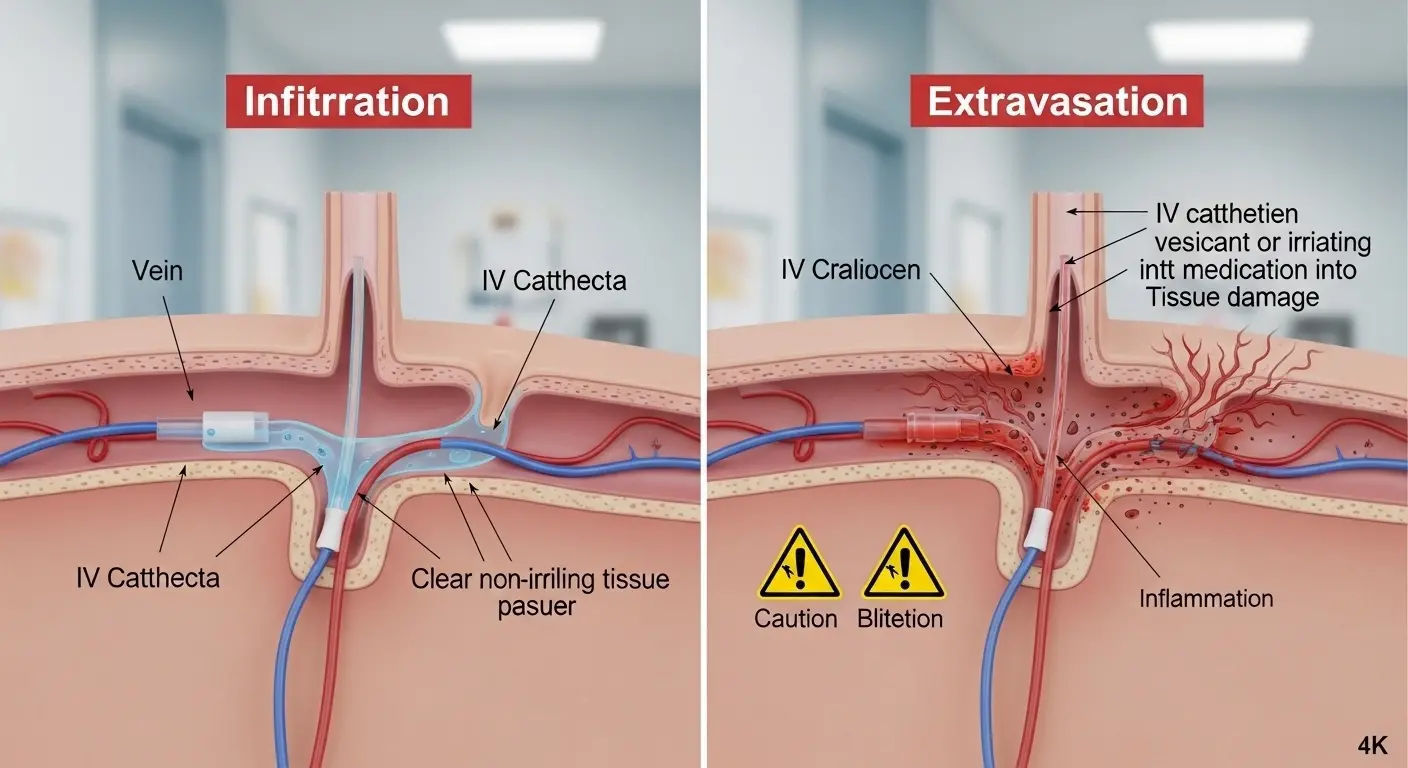
- Infiltration: The accidental leakage of non-vesicant IV fluid into surrounding tissue.
- Extravasation: The accidental leakage of vesicant (harmful) IV fluid into surrounding tissue causing tissue damage.
Pronunciation
- Infiltration
- US: in-fil-TRAY-shun
- UK: in-fil-TRAY-shun
- Extravasation
- US: ek-STRAV-uh-SAY-shun
- UK: ek-STRAV-uh-SAY-shun
Key Difference Between Infiltration and Extravasation
Infiltration involves harmless fluid leakage into tissue, while extravasation involves dangerous or irritating drugs leaking outside the vein, causing tissue injury.
Now let’s explore the full difference between infiltration and extravasation in detail.
Difference Between Infiltration and Extravasation
1. Definition
- Infiltration: Leakage of non-vesicant fluid into surrounding tissue.
- Example 1: Saline leaking from IV site
- Example 2: Glucose solution entering tissue accidentally
- Extravasation: Leakage of vesicant fluid causing tissue damage.
- Example 1: Chemotherapy drug leakage
- Example 2: Calcium chloride escaping into tissue
2. Severity
- Infiltration: Mild condition with minimal harm.
- Example 1: Slight swelling at IV site
- Example 2: Cool skin around insertion area
- Extravasation: Severe condition requiring urgent care.
- Example 1: Skin blistering
- Example 2: Tissue necrosis
3. Type of Fluid
- Infiltration: Non-toxic fluids.
- Example 1: Normal saline
- Example 2: Dextrose water
- Extravasation: Toxic or irritant drugs.
- Example 1: Chemotherapy agents
- Example 2: Potassium chloride
4. Tissue Damage
- Infiltration: No permanent damage.
- Example 1: Temporary swelling
- Example 2: Mild discomfort
- Extravasation: Can cause permanent injury.
- Example 1: Skin ulceration
- Example 2: Deep tissue destruction
5. Symptoms
- Infiltration: Coolness, swelling, tightness.
- Example 1: Puffy skin
- Example 2: Reduced IV flow
- Extravasation: Pain, burning, redness.
- Example 1: Severe burning sensation
- Example 2: Blister formation
6. Treatment Response
- Infiltration: Remove IV and apply cold/warm compress.
- Example 1: Elevating limb
- Example 2: Restart IV in another site
- Extravasation: Immediate medical intervention required.
- Example 1: Antidote administration
- Example 2: Surgical consultation
7. Onset
- Infiltration: Gradual onset.
- Example 1: Slow swelling
- Example 2: Decreased drip rate
- Extravasation: Often sudden and painful.
- Example 1: Immediate burning
- Example 2: Rapid skin change
8. Detection
- Infiltration: Easily noticed by swelling.
- Example 1: Cool skin area
- Example 2: IV stoppage
- Extravasation: Detected by pain and tissue reaction.
- Example 1: Severe discomfort
- Example 2: Visible skin damage
9. Risk Level
- Infiltration: Low risk.
- Example 1: Routine IV complication
- Example 2: Easily managed in clinics
- Extravasation: High risk.
- Example 1: Emergency condition
- Example 2: Requires specialist care
10. Outcome
- Infiltration: Usually reversible.
- Example 1: Swelling subsides
- Example 2: No long-term effects
- Extravasation: May cause permanent damage.
- Example 1: Scarring
- Example 2: Tissue loss
Nature and Behaviour
- Infiltration behaves like a harmless fluid leakage that spreads gently into surrounding tissues without causing major harm.
- Extravasation behaves aggressively, damaging tissues like a chemical burn due to toxic drug leakage.
Why People Are Confused
People confuse these terms because both involve IV fluid leaking into tissue and share similar symptoms like swelling and discomfort. However, the key difference lies in the type of fluid and level of tissue damage.
Table: Difference and Similarity Between Infiltration and Extravasation
| Feature | Infiltration | Extravasation |
| Fluid Type | Non-toxic | Toxic/vesicant |
| Severity | Mild | Severe |
| Tissue Damage | None/minor | Major |
| Symptoms | Swelling | Pain & burning |
| Treatment | Simple care | Emergency care |
| Similarity | Both involve IV leakage into tissue |
Which is Better in What Situation?
Infiltration is less dangerous and easier to manage, making it more acceptable in minor IV complications. It usually resolves quickly without long-term damage. Healthcare providers can handle it by stopping the IV and relocating it.
Extravasation, however, is far more serious and requires immediate intervention. It is not “better” in any situation because it indicates harmful drug leakage. Early detection is critical to prevent permanent tissue damage. Therefore, infiltration is preferable only because it is less harmful, while extravasation always demands urgent medical attention and careful monitoring in clinical settings.
Metaphors and Similes
- Infiltration: Like water slowly soaking into a sponge without damage.
- Extravasation: Like acid spilling on fabric, causing burning and destruction.
Connotative Meaning
- Infiltration: Neutral to mildly negative (minor medical complication)
- Example: “Infiltration caused slight swelling at the IV site.”
- Extravasation: Negative (serious medical emergency)
- Example: “Extravasation led to tissue injury requiring treatment.”
Idioms or Proverbs
There are no widely recognized idioms specifically for these medical terms. However, in clinical language:
- “Stop the leak before it spreads” (used metaphorically for infiltration control)
- “Damage beyond the vein is danger within” (used in extravasation awareness training)
Works in Literature
No specific literary works are dedicated to these medical terms, but they are commonly discussed in:
- Medical-Surgical Nursing (Textbook, Brunner & Suddarth, ongoing editions)
- Clinical Nursing Skills and Techniques (Potter & Perry, modern editions)
Movie References
No movies are directly based on infiltration or extravasation. However, both terms appear in medical dramas and hospital-based documentaries worldwide.
Frequently Asked Questions (FAQs)
1. What is the main difference between infiltration and extravasation?
Infiltration involves harmless fluid leakage, while extravasation involves harmful drug leakage.
2. Which is more dangerous?
Extravasation is more dangerous due to tissue damage risk.
3. Can infiltration cause permanent damage?
No, it usually resolves without lasting harm.
4. How is extravasation treated?
It requires immediate medical intervention and sometimes antidotes.
5. Why do both occur during IV therapy?
Due to improper needle placement or vein damage.
How Both Are Useful for Surroundings
Understanding infiltration helps nurses and caregivers manage minor IV complications safely. Recognizing extravasation protects patients from serious injuries and improves hospital safety standards. Both concepts improve healthcare quality and patient care awareness.
Final Words
Both infiltration and extravasation are important clinical concepts in IV therapy management. While infiltration is generally harmless and manageable, extravasation is a medical emergency that can cause severe tissue damage. Healthcare professionals must quickly identify and respond to both conditions to ensure patient safety. Proper training and awareness reduce risks and improve treatment outcomes in hospitals and clinics.
Conclusion
In conclusion, the difference between infiltration and extravasation is essential knowledge in healthcare practice. Infiltration refers to the leakage of non-harmful IV fluids into surrounding tissues, usually causing mild swelling and discomfort. In contrast, extravasation involves the leakage of harmful or vesicant drugs that can severely damage tissues and lead to serious complications.
Understanding the difference between infiltration and extravasation helps medical professionals act quickly and prevent further harm. Although both conditions occur during IV therapy, their severity and treatment approaches are very different. Proper identification ensures patient safety, reduces risks, and improves clinical outcomes. Therefore, mastering the difference between infiltration and extravasation is vital for nurses, doctors, and healthcare students in real-world medical settings.

SwiftHarbor is a dedicated English professor, language researcher, and the founder of SpellCompare.com. With years of academic experience in English grammar, vocabulary development, and linguistic comparison, SwiftHarbor specializes in simplifying complex language rules into clear, practical explanations.
As an expert in word usage, spelling differences, and commonly confused terms, SwiftHarbor has helped thousands of learners improve their writing accuracy and communication skills. Through SpellCompare.com, he provides detailed comparisons, easy examples, and research-based insights that make English learning accessible for students, writers, and professionals worldwide.
Known for a clear teaching style and structured explanations, SwiftHarbor focuses on eliminating confusion between similar words, improving grammar confidence, and promoting precise communication. His mission is simple: to make English easier, clearer, and more powerful for everyone.