Imagine waking up to the crisp mountain air, the scent of pine in the forest, and the sound of a distant river. You’re ready to explore, but a question arises: will it be hiking or backpacking? Both hiking and backpacking are popular outdoor activities, yet they offer different experiences.
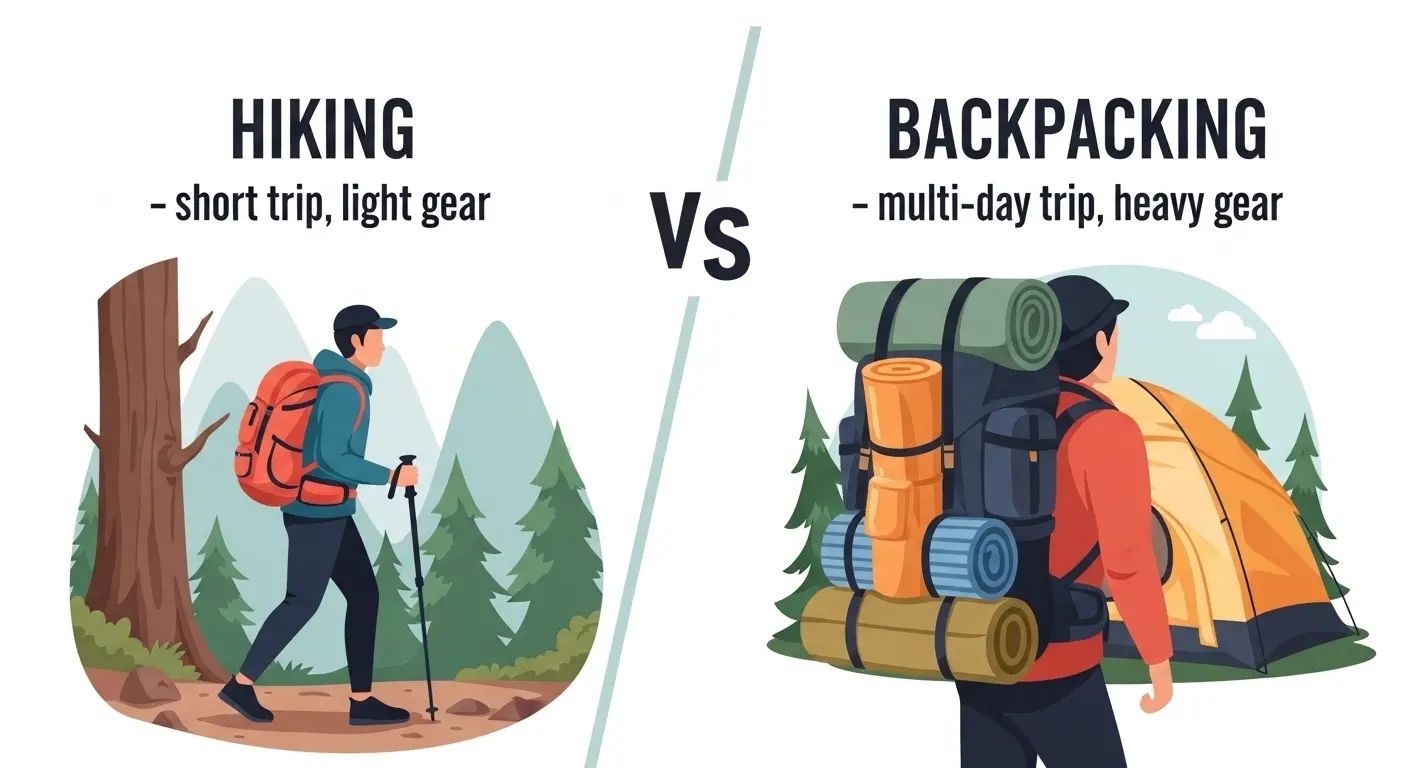
Hiking is often a short-term adventure, a journey of a few hours or a day. Backpacking, on the other hand, is a longer expedition, where you carry your gear and camp along the way. Understanding the difference between hiking and backpacking is essential for planning a safe and enjoyable trip.
Knowing when to hike or backpack can transform your outdoor adventures and help both beginners and seasoned explorers make informed decisions. Whether you want a quick escape or a multi-day adventure, recognizing their distinctions matters.
Pronunciation:
- Hiking: US /ˈhaɪ.kɪŋ/, UK /ˈhaɪ.kɪŋ/
- Backpacking: US /ˈbækˌpækɪŋ/, UK /ˈbækˌpækɪŋ/
Linking Hook:
To truly grasp which activity suits your style, let’s dive deeper into the key differences between hiking and backpacking, exploring their unique characteristics and purposes.
Difference Between Hiking and Backpacking
Here are 10 main points of difference with examples:
- Duration
- Hiking: Usually lasts a few hours or a day.
- Example 1: A morning hike to the local hill.
- Example 2: An afternoon walk on a forest trail.
- Backpacking: Multi-day trips requiring overnight camping.
- Example 1: A 3-day trek across the Appalachian Trail.
- Example 2: Exploring the Scottish Highlands over a week.
- Hiking: Usually lasts a few hours or a day.
- Equipment
- Hiking: Minimal gear, usually a water bottle and snacks.
- Example 1: Hiking shoes, daypack, and sunscreen.
- Example 2: Trekking poles for a short mountain trail.
- Backpacking: Requires full camping gear, tents, food, and sleeping bags.
- Example 1: Carrying a tent, stove, and 3-day food supply.
- Example 2: Backpacking in national parks with a full survival kit.
- Hiking: Minimal gear, usually a water bottle and snacks.
- Distance Covered
- Hiking: Shorter distances, typically 3–10 miles.
- Example 1: Lake trail hiking, 5 miles.
- Example 2: Canyon rim hike, 6 miles.
- Backpacking: Longer distances, sometimes over 50 miles.
- Example 1: Pacific Crest Trail section hike.
- Example 2: Multi-day trek in the Rockies.
- Hiking: Shorter distances, typically 3–10 miles.
- Intensity
- Hiking: Generally less strenuous.
- Example 1: Leisurely forest stroll.
- Example 2: Gentle hill path in the countryside.
- Backpacking: More physically demanding.
- Example 1: Carrying 30 lbs for several days.
- Example 2: Climbing mountainous terrain with full gear.
- Hiking: Generally less strenuous.
- Planning
- Hiking: Minimal planning needed.
- Example 1: Walking a local trail on a whim.
- Example 2: Visiting a nearby park without reservations.
- Backpacking: Requires route planning, food, water, and campsite selection.
- Example 1: Booking shelters along the trail.
- Example 2: Mapping water sources in advance.
- Hiking: Minimal planning needed.
- Accommodation
- Hiking: Usually returns home or stays in nearby lodging.
- Example 1: Hiking for a day trip from your city.
- Example 2: Half-day beach trail.
- Backpacking: Overnight camping or trekking shelters.
- Example 1: Sleeping in a tent under the stars.
- Example 2: Using a mountain hut in the Alps.
- Hiking: Usually returns home or stays in nearby lodging.
- Food & Water
- Hiking: Simple snacks, water bottles.
- Example 1: Sandwiches and energy bars.
- Example 2: A small water bottle for a few miles.
- Backpacking: Full meals, water purification systems.
- Example 1: Freeze-dried meals cooked on a portable stove.
- Example 2: Carrying 3 liters of water and a filter.
- Hiking: Simple snacks, water bottles.
- Skill Level
- Hiking: Beginner-friendly.
- Example 1: Easy nature trail in a park.
- Example 2: Local hill walk.
- Backpacking: Requires advanced navigation and survival skills.
- Example 1: Navigating wilderness without marked paths.
- Example 2: Setting up camp in remote locations.
- Hiking: Beginner-friendly.
- Purpose
- Hiking: Exercise, relaxation, sightseeing.
- Example 1: Morning hike to enjoy sunrise.
- Example 2: Hiking for stress relief.
- Backpacking: Adventure, exploration, and immersion in nature.
- Example 1: Crossing a mountain range over several days.
- Example 2: Long desert trek to experience solitude.
- Hiking: Exercise, relaxation, sightseeing.
- Community & Social Aspect
- Hiking: Often done in groups or solo casually.
- Example 1: Friends hiking on weekends.
- Example 2: Family hiking trip.
- Backpacking: Usually requires coordination for longer trips.
- Example 1: Backpacking with a club or team.
- Example 2: Organizing multi-day trips with friends.
Nature and Behaviour:
- Hiking: Short, flexible, low-risk, easy to adapt.
- Backpacking: Endurance-driven, prepared, self-reliant, immersive.
Why People Are Confused:
The confusion arises because both involve walking in nature. People often assume backpacking is just a “long hike,” but it involves distinct planning, gear, and mindset.
Hiking vs Backpacking: Table of Difference and Similarity
| Feature | Hiking | Backpacking | Similarity |
| Duration | Few hours to a day | Multiple days | Both involve walking outdoors |
| Equipment | Minimal | Extensive | Both need suitable clothing |
| Distance | Short | Long | Walking is central to both |
| Intensity | Low to moderate | High | Can be physically engaging |
| Planning | Simple | Detailed | Requires some preparation |
| Accommodation | Return home | Camp or shelter | Outdoor-focused |
| Food & Water | Snacks, water | Full meals, water purification | Hydration needed |
| Skill Level | Beginner-friendly | Requires experience | Enjoyment of nature |
| Purpose | Exercise, sightseeing | Adventure, immersion | Recreation |
| Social Aspect | Casual groups | Coordinated trips | Can be social |
Which Is Better in What Situation?
- Hiking: Ideal for a short escape, beginner outdoor enthusiasts, or family trips. It’s perfect for a morning or afternoon without heavy preparation.
- Backpacking: Best for experienced adventurers seeking multi-day journeys, complete immersion in nature, and a test of endurance.
Metaphors and Similes
- Hiking: “Life is a gentle hike through a forest of choices.”
- Backpacking: “Life is like backpacking across mountains, heavy yet rewarding.”
Connotative Meanings:
- Hiking: Positive (relaxation, fun) – “A refreshing hike rejuvenates the spirit.”
- Backpacking: Neutral/Positive (challenge, adventure) – “Backpacking tests patience and courage.”
Idioms & Proverbs
- “Take a hike” – meaning: go away.
- “Carry your own backpack” – meaning: take responsibility.
Works in Literature
- “A Walk in the Woods” (Memoir, Bill Bryson, 1998) – Hiking/Backpacking
- “Wild: From Lost to Found on the Pacific Crest Trail” (Memoir, Cheryl Strayed, 2012) – Backpacking
Movies
- Wild (2014, USA) – Backpacking
- A Walk in the Woods (2015, USA) – Hiking
FAQs
- Is hiking the same as backpacking?
No, hiking is shorter and simpler; backpacking involves multi-day trips with camping gear. - Do you need special gear for hiking?
Only basic gear like shoes, water, and snacks. - Can beginners try backpacking?
Only with preparation, shorter routes, and guidance. - Which burns more calories?
Backpacking, due to longer duration and heavier load. - Can both be done solo?
Hiking: yes, easily; Backpacking: possible but requires safety precautions.
Environmental Benefits
- Hiking: Encourages appreciation of nature, low impact.
- Backpacking: Promotes responsible outdoor ethics, conservation awareness.
Final Words:
Hiking and backpacking each provide unique ways to connect with nature. While hiking offers relaxation and accessibility, backpacking challenges endurance and planning skills. Both enrich our physical, mental, and environmental understanding.
Conclusion:
The difference between hiking and backpacking lies in duration, gear, intensity, and purpose. Recognizing these distinctions allows outdoor enthusiasts to plan experiences suited to their skill level, enjoyment, and environmental consciousness.
If it’s a short day hike or a multi-day backpacking journey, both activities inspire exploration, adventure, and respect for nature. Choosing wisely ensures a safe, memorable, and rewarding outdoor adventure for all.

My name is SwiftSphere, and I am a passionate English language author and the creator of Spellcompare.com. I specialize in word comparisons, grammar clarity, and simplifying confusing English terms for readers around the world.
As a professional writer, I focus on breaking down commonly misunderstood words, phrases, and language rules into clear, practical explanations. My goal is to make English easier, more accurate, and more accessible for students, professionals, and everyday learners.
Through Spellcompare.com, I provide well-researched, easy-to-understand content that helps readers confidently choose the right words in writing and speech. Whether it’s comparing similar spellings, explaining grammar rules, or clarifying tricky vocabulary, I am committed to delivering precise and reliable guidance.
I believe that strong language skills create strong communication — and strong communication creates opportunity. That belief drives my work every day.