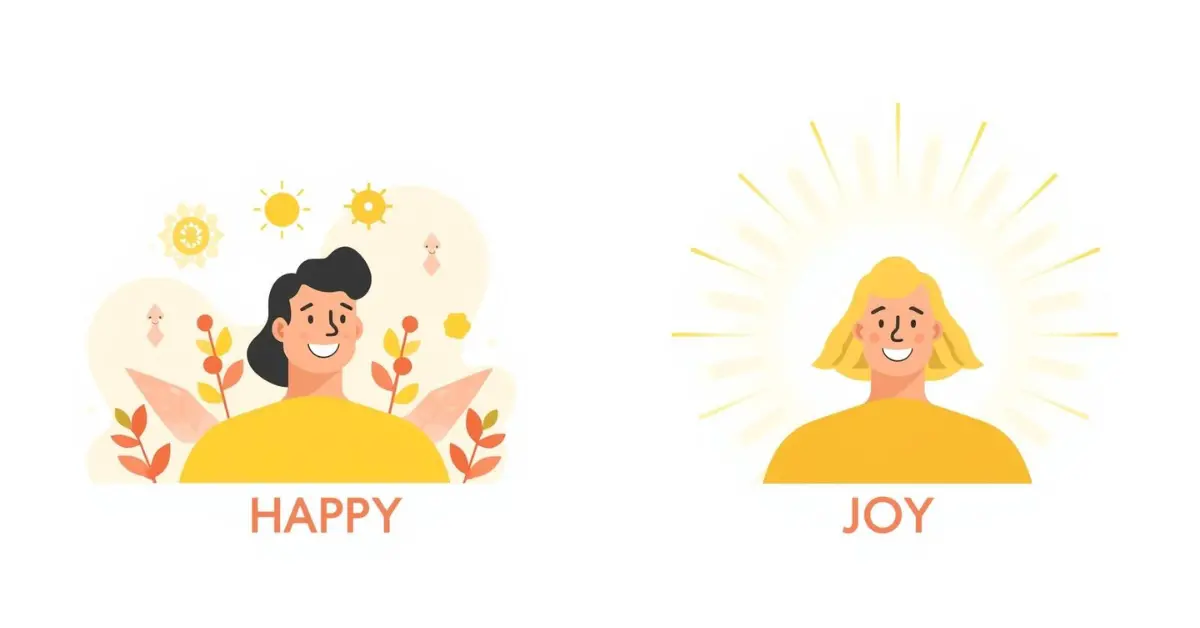
Have you ever felt the flutter of happiness when your favorite song plays, but a deeper, lasting joy when you achieve something meaningful in life? Many people confuse happiness and joy, thinking they are interchangeable, but there’s more than meets the eye. Happiness often reflects a temporary state caused by external circumstances, like receiving a gift or enjoying a sunny day.
On the other hand, joy is a profound and lasting feeling that comes from within, often tied to purpose, fulfillment, or gratitude. Understanding the difference between happiness and joy is essential, not just for emotional intelligence but also for expressing ourselves accurately in writing and speech. Both words shape our experiences and influence how we connect with others in society.
Pronunciation:
- Happy: US /ˈhæpi/, UK /ˈhæpi/
- Joy: US /dʒɔɪ/, UK /dʒɔɪ/
Let’s dive deeper to explore the difference between happy and joy, their nature, usage, and impact.
H2 Difference Between Happy and Joy
1. Duration of Feeling
- Happy: Temporary, fades quickly.
- Example 1: She was happy to get a chocolate bar.
- Example 2: He felt happy after hearing the joke.
- Joy: Long-lasting, enduring feeling.
- Example 1: She felt joy when she completed her first marathon.
- Example 2: Parents experience joy seeing their children grow successfully.
2. Source of Emotion
- Happy: Comes from external events or stimuli.
- Example 1: Receiving a gift made him happy.
- Example 2: Watching a comedy show makes her happy.
- Joy: Comes from internal satisfaction and contentment.
- Example 1: She felt joy through meditation and mindfulness.
- Example 2: Volunteering at the shelter brought him joy.
3. Intensity
- Happy: Mild to moderate intensity.
- Example 1: He was happy to meet an old friend.
- Example 2: She felt happy tasting her favorite dessert.
- Joy: Stronger and more profound emotion.
- Example 1: They felt joy after achieving a life-long goal.
- Example 2: Experiencing true love brought her immense joy.
4. Expression
- Happy: Often expressed through smiles or laughter.
- Example 1: The children were happy playing in the park.
- Example 2: He was happy to see the sunset.
- Joy: May be quiet or subtle, internalized.
- Example 1: She felt a quiet joy during the ceremony.
- Example 2: He experienced joy while reflecting on life achievements.
5. Dependency on Circumstances
- Happy: Highly dependent on situations.
- Example 1: He was happy when the weather was sunny.
- Example 2: She felt happy after receiving praise at work.
- Joy: Less dependent on external factors.
- Example 1: He felt joy even during difficult times.
- Example 2: Spiritual practices gave her joy regardless of surroundings.
6. Emotional Depth
- Happy: Surface-level emotion.
- Example 1: A funny meme made him happy.
- Example 2: She was happy with a small compliment.
- Joy: Deep and meaningful emotion.
- Example 1: Achieving self-acceptance brought him joy.
- Example 2: The birth of her child filled her with joy.
7. Psychological Effect
- Happy: Provides temporary relief and pleasure.
- Example 1: Eating ice cream made him happy.
- Example 2: Watching a movie brought happiness.
- Joy: Contributes to long-term well-being and mental peace.
- Example 1: Gratitude practices bring lasting joy.
- Example 2: Helping others creates inner joy.
8. Physical Manifestation
- Happy: Visible through laughter, clapping, or smiling.
- Example 1: He was happy and clapped at the concert.
- Example 2: She felt happy and jumped in excitement.
- Joy: Can be subtle, internal, or reflected in calm demeanor.
- Example 1: Joyful meditation brings calm serenity.
- Example 2: Parents watching children succeed feel quiet joy.
9. Cognitive Association
- Happy: Linked with fun, amusement, or pleasure.
- Example 1: He felt happy playing video games.
- Example 2: She was happy attending the party.
- Joy: Associated with fulfillment, meaning, and gratitude.
- Example 1: Writing a book brought him joy.
- Example 2: Helping a friend in need gave her joy.
10. Social Perception
- Happy: Often seen as casual or lighthearted.
- Example 1: He seemed happy during the outing.
- Example 2: Her happy mood was contagious at work.
- Joy: Seen as profound and admirable emotion.
- Example 1: The joy on her face inspired others.
- Example 2: His joy in volunteering motivated his team.
Nature and Behaviour
- Happy: Light, temporary, and often reactive to events. More playful and external.
- Joy: Deep, steady, and internal. Reflects emotional maturity and resilience.
Why People Are Confused About Their Use
People often interchange happiness and joy because both relate to positive feelings. The confusion arises due to overlap in outward expressions, such as smiles or laughter, while their depth and duration differ.
Comparison Table
| Feature | Happy | Joy | Similarity |
| Duration | Temporary | Long-lasting | Both positive emotions |
| Source | External | Internal | Both enhance well-being |
| Intensity | Mild to moderate | Strong and deep | Both can be expressed physically |
| Expression | Smiles, laughter | Calm, internal | Both bring pleasure |
| Dependency | Circumstances | Less dependent | Both influenced by experiences |
| Emotional Depth | Surface-level | Profound | Both affect mood |
| Psychological Effect | Temporary pleasure | Long-term peace | Both contribute to happiness |
| Physical Manifestation | Visible externally | Subtle, internal | Both can show in facial expressions |
| Cognitive Link | Fun and amusement | Fulfillment and gratitude | Both involve positive feelings |
| Social Perception | Lighthearted | Admirable, meaningful | Both are socially appreciated |
Which Is Better in What Situation?
Happy: Best for daily life moments, casual interactions, and creating lighthearted social connections. For example, celebrating a friend’s birthday or enjoying a day out. Happiness energizes the immediate mood.
Joy: Best for long-term satisfaction, personal growth, and spiritual or emotional depth. For instance, finding purpose in work, nurturing relationships, or achieving life goals. Joy sustains well-being beyond temporary pleasures.
Usage in Metaphors and Similes
- Happy: “As happy as a clam.” – shows lightheartedness.
- Joy: “Her heart overflowed with joy like a river after the rain.” – depicts deep and flowing emotion.
Connotative Meaning
- Happy: Positive; example: He felt happy playing with friends.
- Joy: Positive; example: She experienced joy while helping the needy.
Idioms & Proverbs
- Happy: “Happiness is homemade.” – finding joy in small things.
- Joy: “Jump for joy.” – express intense delight.
Works in Literature
- Happy: Happy Days, Samuel Beckett, 1961, Play
- Joy: Joy, Jean Craighead George, 1977, Novel
Movies Based on Keywords
- Happy: Happy Feet, 2006, Australia/USA
- Joy: Joy, 2015, USA
Frequently Asked Questions
- Is happiness the same as joy?
- No, happiness is temporary and external; joy is deeper and internal.
- Can joy exist without happiness?
- Yes, joy can persist even without immediate happiness.
- Which is more important?
- Both are important; happiness for daily life, joy for long-term fulfillment.
- Are happiness and joy expressed the same way?
- No, happiness is often outward; joy can be inward and subtle.
- Can you feel both simultaneously?
- Yes, you can feel happiness and joy at the same moment.
How Both Are Useful for Surroundings
- Happy: Spreads positivity, improves social bonds, and creates a light, friendly atmosphere.
- Joy: Inspires others, fosters resilience, and encourages meaningful connections and gratitude.
Final Words for the Both
While happy brightens our days, joy illuminates our lives. Together, they enrich human experience and emotional intelligence. Understanding their nuances allows us to communicate emotions more effectively.
Conclusion
In conclusion, the difference between happiness and joy lies in their duration, source, depth, and impact. Happiness is a fleeting, external emotion, while joy is profound, internal, and lasting. Recognizing these distinctions enhances our emotional literacy, helping us cultivate meaningful relationships, inspire positivity, and lead a fulfilling life.
By appreciating both happiness and joy, we learn not just to experience pleasure but also to find purpose and contentment in everyday life. Both emotions complement each other and together form the spectrum of human positivity.

My name is SwiftSphere, and I am a passionate English language author and the creator of Spellcompare.com. I specialize in word comparisons, grammar clarity, and simplifying confusing English terms for readers around the world.
As a professional writer, I focus on breaking down commonly misunderstood words, phrases, and language rules into clear, practical explanations. My goal is to make English easier, more accurate, and more accessible for students, professionals, and everyday learners.
Through Spellcompare.com, I provide well-researched, easy-to-understand content that helps readers confidently choose the right words in writing and speech. Whether it’s comparing similar spellings, explaining grammar rules, or clarifying tricky vocabulary, I am committed to delivering precise and reliable guidance.
I believe that strong language skills create strong communication — and strong communication creates opportunity. That belief drives my work every day.