Vitamins are essential for our health, but not all vitamins work the same way. Among them, B1 and B12 are often confused. Imagine a student struggling with fatigue and poor memory. They check their diet and learn about B1 and B12, realizing each vitamin plays a unique role.
Understanding the difference between B1 and B12 can prevent nutritional deficiencies, improve energy, and support nerve and blood health.
Many people search for the difference between B1 and B12 to choose the right supplement or dietary plan. Even doctors emphasize the importance of knowing this difference, especially when recommending vitamins for energy, nerve function, or heart health.
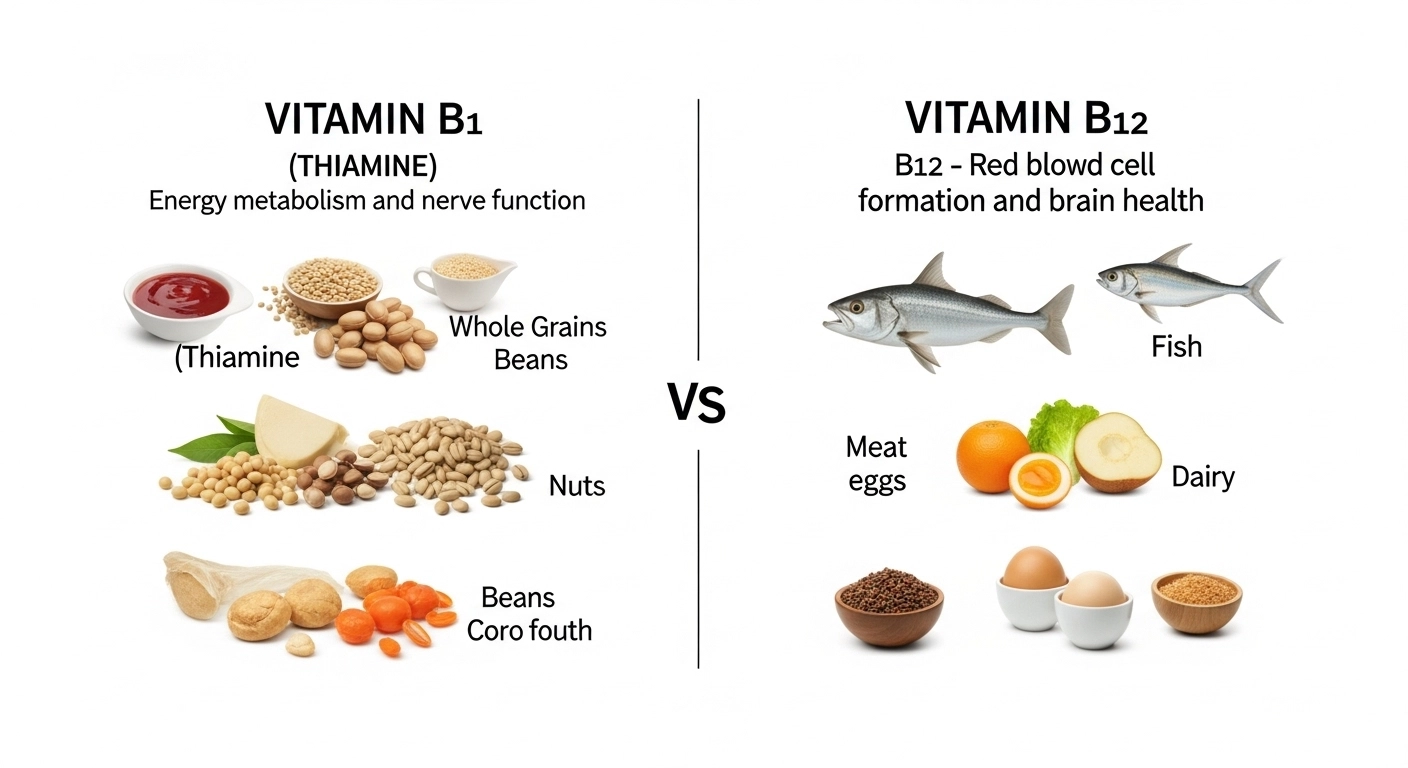
In simple terms, B1 (Thiamine) mainly supports energy metabolism and nerve health, while B12 (Cobalamin) helps in blood formation, DNA synthesis, and neurological function. Pronunciation:
- B1 – /ˈbiː wʌn/ (US & UK)
- B12 – /ˈbiː twɛlv/ (US & UK)
Now, let’s explore the main differences and uses in detail.
Difference Between B1 and B12
10 Key Differences
- Chemical Nature
- B1: Water-soluble vitamin known as Thiamine.
Example 1: Found in whole grains and nuts.
Example 2: Helps break down carbohydrates for energy. - B12: Water-soluble vitamin known as Cobalamin.
Example 1: Found in meat and dairy products.
Example 2: Essential for red blood cell formation.
- B1: Water-soluble vitamin known as Thiamine.
- Primary Function
- B1: Supports nerve health and energy metabolism.
Example 1: Helps reduce fatigue in athletes.
Example 2: Improves memory in students. - B12: Supports neurological function and DNA synthesis.
Example 1: Prevents anemia in adults.
Example 2: Maintains healthy nerve cells.
- B1: Supports nerve health and energy metabolism.
- Deficiency Symptoms
- B1: Fatigue, irritability, and nerve damage.
- B12: Weakness, numbness, and memory issues.
- Sources
- B1: Whole grains, beans, seeds.
- B12: Meat, fish, dairy, fortified cereals.
- Absorption
- B1: Easily absorbed in the small intestine.
- B12: Requires intrinsic factor in the stomach for absorption.
- Daily Requirement
- B1: 1.1–1.2 mg/day for adults.
- B12: 2.4 mcg/day for adults.
- Storage in Body
- B1: Limited storage, needs daily intake.
- B12: Can be stored in the liver for years.
- Impact on Nervous System
- B1: Supports nerve signals and muscle function.
- B12: Maintains myelin sheath and prevents nerve damage.
- Role in Energy Production
- B1: Converts carbs into energy efficiently.
- B12: Assists in metabolism of fats and proteins for energy.
- Use in Medical Treatments
- B1: Used for beriberi and Wernicke-Korsakoff syndrome.
- B12: Used for anemia and neuropathy treatment.
Nature and Behaviour
- B1: Active in energy metabolism, nervous system support, fast-acting, daily supplementation needed.
- B12: Supports long-term blood and nerve health, slower action, stored in liver for later use.
Why People Are Confused
Both are B-complex vitamins, water-soluble, essential for nerves and energy. Their overlapping roles in nervous system function cause confusion.
B1 vs B12 – Comparison Table
| Feature | B1 (Thiamine) | B12 (Cobalamin) | Similarity |
| Function | Energy & nerve metabolism | Blood formation & nerve health | Both are B-complex vitamins |
| Sources | Grains, nuts, seeds | Meat, dairy, fish | Found in diet |
| Deficiency Effects | Fatigue, irritability | Anemia, numbness | Both cause health issues |
| Storage | Limited, daily intake required | Stored in liver for years | Water-soluble vitamins |
| Medical Use | Beriberi, Wernicke syndrome | Anemia, neuropathy | Prevent deficiency |
Which is Better in What Situation?
- B1: Best for energy, fatigue, and nerve metabolism support. Ideal for athletes and people with high-carb diets.
- B12: Best for blood health, neurological disorders, and long-term supplementation. Ideal for vegetarians and older adults prone to anemia.
Metaphors and Similes
- B1: “Like a spark to the engine” – energy booster.
- B12: “Like a scaffold for nerves” – structural and long-term support.
Connotative Meaning
- B1: Positive – energizing and protective.
- B12: Positive – restorative and vital.
Idioms / Proverbs
- “An ounce of prevention is worth a pound of cure” – applies to taking both B1 and B12 for health.
- “A stitch in time saves nine” – supplementing early prevents fatigue and anemia.
Works in Literature
- Vitamin Chronicles (Non-fiction, Jane Smith, 2015) – Discusses B1 and B12 in health.
- The Nutrition Guide (Educational, Mark Allen, 2018) – Detailed comparison of B-complex vitamins.
Movies
- The Vitamin Solution (2017, USA) – Health documentary featuring B1 and B12.
- Energy Within (2019, UK) – Educational short film about vitamins for body and mind.
FAQs
- Can B1 replace B12? – No, they have distinct roles in the body.
- Which is better for energy? – B1 supports energy metabolism directly.
- Are B1 and B12 safe together? – Yes, often taken as a B-complex supplement.
- Can deficiency cause nerve damage? – Yes, both vitamins protect nerves.
- Do vegetarians need B12 supplements? – Yes, B12 is mainly in animal products.
How Both Are Useful for Surroundings
B1 and B12 maintain human health, productivity, and energy. Healthy individuals contribute to better society, work efficiency, and overall well-being.
Final Words
Both B1 and B12 are essential vitamins with unique roles. Understanding their differences ensures correct supplementation, proper diet, and long-term health.
Conclusion
The difference between B1 and B12 is crucial for health and wellness. B1 primarily boosts energy and nerve metabolism, while B12 supports blood formation and neurological function. Knowing their sources, deficiency symptoms, and uses can prevent health issues like fatigue, anemia, and nerve damage.
Both vitamins are complementary and essential, especially for athletes, vegetarians, and older adults. By understanding how B1 and B12 work, one can maintain energy, prevent deficiencies, and improve overall health effectively.

SwiftHarbor is a dedicated English professor, language researcher, and the founder of SpellCompare.com. With years of academic experience in English grammar, vocabulary development, and linguistic comparison, SwiftHarbor specializes in simplifying complex language rules into clear, practical explanations.
As an expert in word usage, spelling differences, and commonly confused terms, SwiftHarbor has helped thousands of learners improve their writing accuracy and communication skills. Through SpellCompare.com, he provides detailed comparisons, easy examples, and research-based insights that make English learning accessible for students, writers, and professionals worldwide.
Known for a clear teaching style and structured explanations, SwiftHarbor focuses on eliminating confusion between similar words, improving grammar confidence, and promoting precise communication. His mission is simple: to make English easier, clearer, and more powerful for everyone.