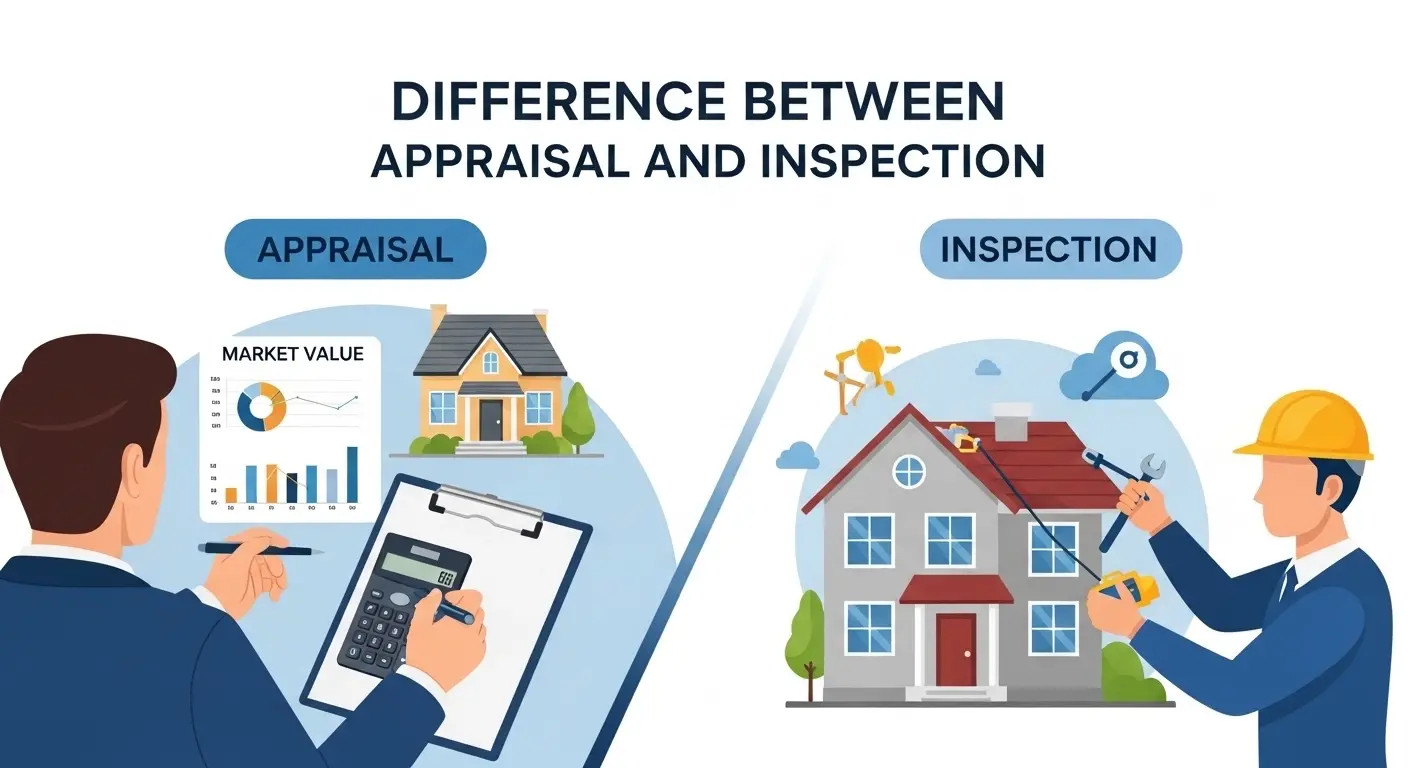
Imagine buying a house in a bustling city. You call a professional to inspect the property, checking the roof, plumbing, and foundation. Later, another expert comes to appraise the same house, evaluating its market value.
Many people confuse appraisal and inspection, thinking they serve the same purpose, but they are distinct processes. While an inspection focuses on assessing the condition, an appraisal measures the monetary worth.
Understanding the difference between appraisal and inspection is crucial for homeowners, real estate agents, and buyers to make informed decisions. In everyday life, whether buying a car, a property, or even rare collectibles, knowing the nuances of appraisal and inspection ensures both safety and value.
Pronunciation:
- Appraisal – US: /əˈpreɪ.zəl/, UK: /əˈpreɪ.zəl/
- Inspection – US: /ɪnˈspek.ʃən/, UK: /ɪnˈspek.ʃən/
Understanding the practical and financial impact of these processes leads us into the detailed differences between appraisal and inspection.
H2: Difference Between Appraisal and Inspection
Here are 10 clear points of difference between appraisal and inspection:
1. Purpose
- Appraisal: Determines monetary value.
- Example 1: A house appraised at $250,000 for a mortgage.
- Example 2: Antique furniture appraised to set an insurance premium.
- Inspection: Assesses condition and functionality.
- Example 1: Inspector finds a leaking roof in a house.
- Example 2: Car inspection reveals worn brake pads.
2. Focus Area
- Appraisal: Focuses on market value and comparables.
- Example 1: Comparing recent home sales to price a property.
- Example 2: Appraising a diamond based on cut and clarity.
- Inspection: Focuses on physical attributes and performance.
- Example 1: Inspecting plumbing for leaks.
- Example 2: Checking electrical wiring for safety.
3. Professional Background
- Appraisal: Conducted by certified appraisers.
- Example 1: Real estate appraisers licensed by state boards.
- Example 2: Art appraisers certified by professional guilds.
- Inspection: Done by inspectors specialized in safety and quality.
- Example 1: Home inspector checks foundation and roof.
- Example 2: Vehicle inspector evaluates engine performance.
4. Methodology
- Appraisal: Uses comparative market analysis, statistical data.
- Example 1: An appraiser compares similar homes sold recently.
- Example 2: Jewelry appraised using auction prices.
- Inspection: Involves physical examination, testing, and measurements.
- Example 1: Moisture meter detects water damage in walls.
- Example 2: Car’s brakes are physically tested for wear.
5. Outcome
- Appraisal: Produces a monetary value or price estimate.
- Example 1: Appraised value guides mortgage approval.
- Example 2: Antique appraisal sets resale value.
- Inspection: Provides condition report and recommendations.
- Example 1: Inspector advises roof replacement.
- Example 2: Home inspector notes faulty wiring.
6. Legal Importance
- Appraisal: Often required by banks, insurance companies.
- Example 1: Lenders require appraisals before approving mortgages.
- Example 2: Insurance companies require appraisal for coverage.
- Inspection: Important for safety and regulatory compliance.
- Example 1: Building inspection needed before selling.
- Example 2: Food factory inspection ensures hygiene standards.
7. Time Factor
- Appraisal: May take a few days to prepare.
- Example 1: House appraisal completed in 3 business days.
- Example 2: Jewelry appraisal reported in one week.
- Inspection: Usually conducted on-site and completed in hours.
- Example 1: Home inspection done in 2–3 hours.
- Example 2: Car inspection completed in 1 hour.
8. Scope
- Appraisal: Broader in financial perspective.
- Example 1: Evaluating the overall property market potential.
- Example 2: Valuing a collection of rare coins.
- Inspection: Narrower, technical, detail-oriented.
- Example 1: Inspecting HVAC system for defects.
- Example 2: Inspecting windows for air leaks.
9. Documentation
- Appraisal: Formal appraisal report with market analysis.
- Example 1: 10-page property appraisal for mortgage approval.
- Example 2: Appraisal certificate for insurance claims.
- Inspection: Checklist or inspection report noting defects.
- Example 1: Inspection report highlighting roof and plumbing issues.
- Example 2: Vehicle inspection sheet noting engine problems.
10. Value Perception
- Appraisal: Associated with financial worth.
- Example 1: Appraising an old painting increases its sale value.
- Example 2: House appraised higher due to location.
- Inspection: Associated with safety and functionality.
- Example 1: Inspecting a bridge ensures public safety.
- Example 2: Car inspection ensures roadworthiness.
Nature and Behaviour
- Appraisal: Objective, financially oriented, analytical, predictive.
- Inspection: Objective, detail-focused, practical, safety-oriented.
Why People Are Confused
Many confuse appraisal and inspection because both involve professionals evaluating an object or property. However, the purpose—value versus condition—is the key difference.
Difference & Similarity Table
| Feature | Appraisal | Inspection | Similarity |
| Purpose | Value determination | Condition assessment | Both evaluate an object |
| Method | Market analysis | Physical examination | Professional judgment required |
| Outcome | Monetary estimate | Condition report | Written documentation |
| Time | Few days | Few hours | Conducted by specialists |
| Legal | Mortgage, insurance | Safety compliance | Required in transactions |
| Focus | Financial | Technical | Evaluates specific aspects |
| Documentation | Appraisal report | Inspection checklist | Formal report issued |
| Perception | Monetary | Safety | Enhances decision-making |
Which is Better in What Situation?
- Appraisal: Best when you need to know the market value of a property, collectible, or asset. For example, when selling a house or securing a loan, appraisal helps determine a fair price. It’s financially focused and supports investment decisions.
- Inspection: Best when you need to know the condition and functionality of an object. Before buying a house, car, or equipment, an inspection ensures safety, quality, and compliance with regulations. It’s practically oriented and prevents future problems.
Metaphors and Similes
- Appraisal: “Life is like an appraisal; every decision has a value.”
- Inspection: “Her eyes inspected the room like a careful inspector.”
Connotative Meaning
- Appraisal: Neutral to positive. Example: “The antique’s appraisal delighted the owner.”
- Inspection: Neutral, sometimes slightly negative. Example: “The food inspection revealed multiple issues.”
Idioms or Proverbs
- “An ounce of prevention is worth a pound of cure.” (Inspection-oriented)
- “Value is in the eye of the beholder.” (Appraisal-oriented)
Works in Literature
- Appraisal – “The Appraisal” (Short Story, John Doe, 1999)
- Inspection – “The Inspector General” (Play, Nikolai Gogol, 1836)
Movies
- The Appraisal (2021, USA)
- The Inspector (1962, UK)
FAQs
- Can appraisal replace inspection? No, appraisal only determines value.
- Is inspection legally required? Often yes, for safety compliance.
- Who is more qualified? Both are specialists in their field.
- Can both be done together? Yes, for real estate transactions.
- Which costs more? Appraisal often costs more due to analysis depth.
How Both Are Useful for Surroundings
- Appraisal: Ensures fair market value, supports economic decisions, and prevents financial disputes.
- Inspection: Ensures safety, quality, and sustainability in homes, vehicles, and infrastructure.
Final Words
Understanding appraisal and inspection empowers individuals and professionals to make informed, safe, and financially sound decisions. While appraisal emphasizes value, inspection emphasizes safety, both complement each other.
Conclusion
In conclusion, the difference between appraisal and inspection lies in purpose, methodology, and outcome. Appraisal measures value, often for financial decisions, while inspection ensures safety and functional quality.
Confusing the two can lead to poor investments or overlooked risks. Professionals, buyers, and homeowners must understand when to use each process. By integrating both, society benefits from informed economic transactions and safer surroundings. Recognizing these distinctions also enhances literacy in real estate, art, and consumer goods. Therefore, appraisal and inspection are not interchangeable but mutually supportive tools that safeguard both financial and physical interests.

SwiftHarbor is a dedicated English professor, language researcher, and the founder of SpellCompare.com. With years of academic experience in English grammar, vocabulary development, and linguistic comparison, SwiftHarbor specializes in simplifying complex language rules into clear, practical explanations.
As an expert in word usage, spelling differences, and commonly confused terms, SwiftHarbor has helped thousands of learners improve their writing accuracy and communication skills. Through SpellCompare.com, he provides detailed comparisons, easy examples, and research-based insights that make English learning accessible for students, writers, and professionals worldwide.
Known for a clear teaching style and structured explanations, SwiftHarbor focuses on eliminating confusion between similar words, improving grammar confidence, and promoting precise communication. His mission is simple: to make English easier, clearer, and more powerful for everyone.